

When you start planning the food for your wedding in Spain, you quickly realise it’s about so much more than just a menu. It’s the heart and soul of the celebration, the one thing your guests will be talking about long after the last dance.
Why Your Wedding Catering Deserves Centre Stage
Think of your wedding meal as the ultimate act of hospitality. It's that wonderful moment when you bring everyone you love together to break bread, forge new friendships, and celebrate your new beginning. Here in Spain, where food is such a massive part of the culture, sharing a meal is a big deal. A beautifully thought-out menu and flawless service can turn a simple dinner into a story that perfectly captures who you are as a couple.
This guide is here to walk you through it all, step by step. We’ll cover everything from figuring out the difference between service styles to getting a handle on costs here on the gorgeous Costa Blanca, helping you make decisions you feel great about.
The Heartbeat of the Celebration
Getting the catering right is absolutely key because it sets the mood for the entire reception. There’s a good reason it’s such a driving force in the local events industry. In Spain's buzzing wedding scene, catering is a true powerhouse. The Spanish catering market as a whole has hit a staggering USD 2.57 billion, and it's event catering—weddings in particular—that’s fuelling most of that growth. You can dive deeper into these market dynamics to see just how significant it is.
Your wedding meal is a chance to tell your story, share what you love to eat, and create a warm, welcoming vibe that makes every single guest feel special.
This shift towards creating an experience is why so many couples today put catering at the top of their priority list. It's not about just feeding people; it's about creating memories. Great catering touches every part of the day:
- Guest Experience: Amazing food and attentive service make your guests feel looked after and truly appreciated, which makes the whole day better for them.
- Atmosphere and Flow: The way you serve the food—whether it’s a formal sit-down dinner or a series of fun, interactive food stations—really dictates the energy of the evening.
- Personal Expression: The menu is your canvas. It’s a place to show off your tastes, give a nod to your heritage, and tell a delicious story to your friends and family.
Breaking Down Wedding Catering Costs on the Costa Blanca
Let's talk numbers. Sorting out the financial side of your wedding food is, without a doubt, one of the biggest parts of planning your celebration. Here on the Costa Blanca, where amazing food is part of the culture, getting a clear picture of the costs helps you build a budget that works without having to compromise on the experience.
So, how do caterers actually price everything? The most common approach is a per-guest basis. This isn't just a charge for the plate of food; think of it as an all-in-one price that bundles the menu, the staff who serve it, the tableware, and usually the drinks served with the meal.
Of course, that price can swing quite a bit depending on your vision. A beautiful, rustic buffet will have a very different price tag compared to a lavish, five-course seated dinner featuring premium local seafood.
What Does a Standard Package Include?
When a caterer in Alicante or a nearby town sends you a quote, it will typically group several key things together. This makes it so much easier to see what you're getting for your money right from the start.
A typical package usually covers:
- The Cocktail Hour: This is your welcome reception, with a delicious selection of hot and cold canapés and drinks to get the celebration started.
- The Main Meal: Whether you've chosen a multi-course seated dinner, a stunning buffet spread, or trendy food stations, this is the centrepiece.
- Dinner Beverages: This nearly always includes a great selection of Spanish red and white wines, beer, soft drinks, and water for the tables.
- Service Staff: This is the team that makes it all happen—the chefs, servers, and bartenders who ensure everything runs like clockwork.
- Tableware and Linens: Don't forget the details! Standard plates, cutlery, glassware, and basic tablecloths are almost always part of the deal.
This graphic gives you a sense of just how important events are to the overall catering market here in Spain.
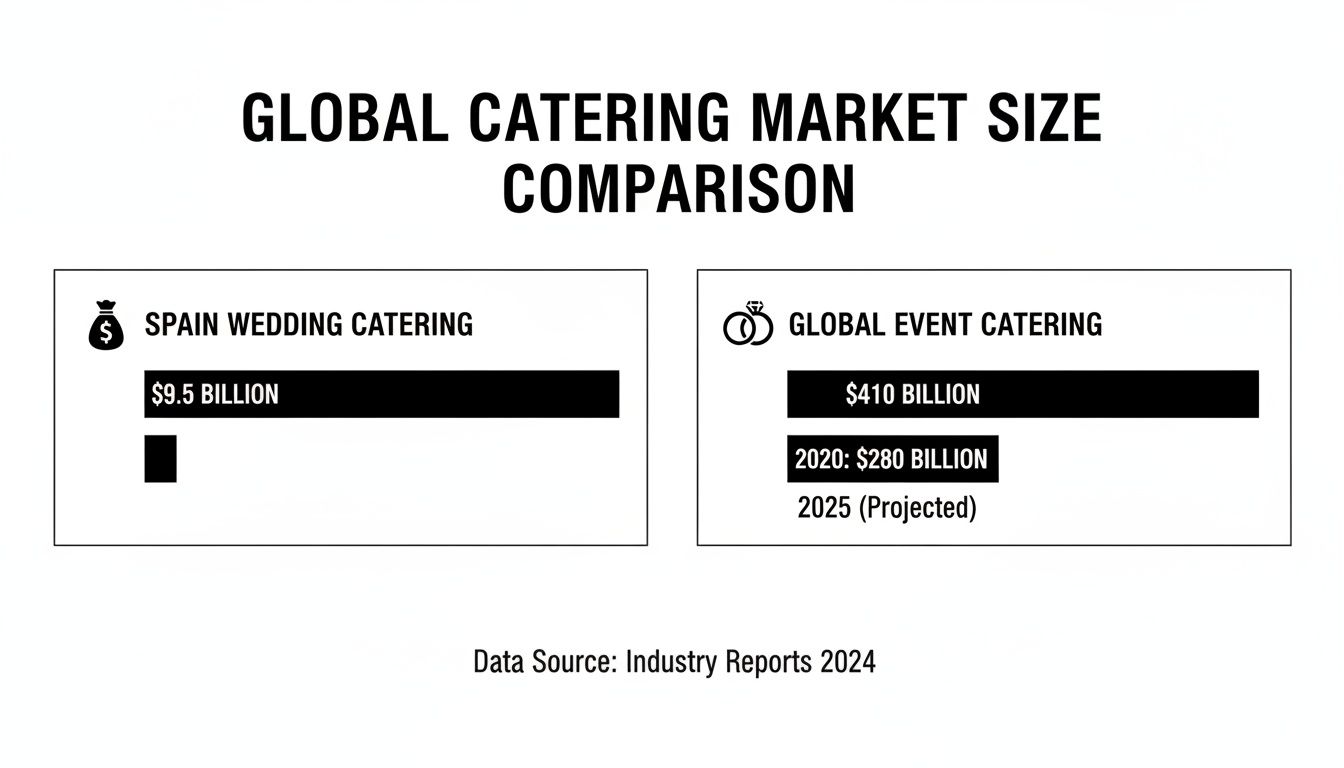
As you can see, special events like weddings aren't just a small slice of the pie; they are a massive driving force for the entire industry.
Average Costs and What to Expect
In Spain, weddings are a true culinary event. It's not surprising that catering often ends up being the biggest line item in the budget, right up there with the venue. With the average Spanish wedding cost sitting around €24,618—and a notable 44% of couples spending over €25,000—it’s clear that food is a priority.
You can generally expect menu prices to range from €120 to over €250 per guest. This cost reflects the full Spanish wedding experience: the canapés, the welcome cava, a multi-course dinner with thoughtfully paired wines, and coffee to finish.
This per-head cost is your starting point, but it's smart to think about the extras that can really personalise your day and, of course, affect your final spend.
Here's a sample budget to help you visualise how those costs might break down for a wedding with 100 guests in the region.
Sample Wedding Catering Budget Breakdown in Spain (Per 100 Guests)
| Catering Component | Average Cost Per Guest | Estimated Total for 100 Guests |
|---|---|---|
| Cocktail Hour & Canapés | €35 | €3,500 |
| Seated Dinner (3-Course) | €90 | €9,000 |
| Wine & Beverages (Dinner) | €25 | €2,500 |
| Open Bar (4 Hours) | €40 | €4,000 |
| Late-Night Snacks | €15 | €1,500 |
| Wedding Cake/Dessert | €8 | €800 |
| Staff & Service (Included) | (Often bundled) | (Often bundled) |
| VAT (IVA @ 10%) | €21.30 | €2,130 |
| Estimated Grand Total | €234.30 | €23,430 |
This table provides a realistic snapshot, but remember that your final figures will depend entirely on the choices you make with your caterer.
Common Additional Expenses to Budget For
Beyond the main package, there are a few popular add-ons that can really elevate the guest experience. It’s a great idea to chat about these with your planner and caterer early on so you have a complete financial picture.
A quick tip from experience: Always ask for a detailed proposal that clearly separates what's included from what's considered an extra. Good communication here is the key to avoiding any last-minute budget surprises.
Here are a few common extras to keep in mind:
- Open Bar (Barra Libre): An open bar after dinner is a non-negotiable for most Spanish weddings. Packages usually start around €40 per person for a four-hour block and go up if you want to include premium spirits.
- Late-Night Snacks (Recena): To fuel the dancing, many couples offer late-night bites like mini burgers, churros with chocolate, or pizza slices. This can add another €10 to €30 per guest.
- Upgraded Items: If you have your heart set on things like a top-tier Iberian ham carving station, fresh lobster, exclusive wines, or high-end designer linens, these will naturally increase the per-person cost.
- Supplier Meals: It's a small but important detail! Remember to budget for meals for your wedding planner, photographers, and other vendors who are with you for the entire day.
Getting a handle on these elements is the first real step toward creating a day that’s both memorable and financially comfortable. For more comprehensive advice, our guide on planning a wedding in Spain is a great place to continue.
Choosing Your Perfect Wedding Service Style
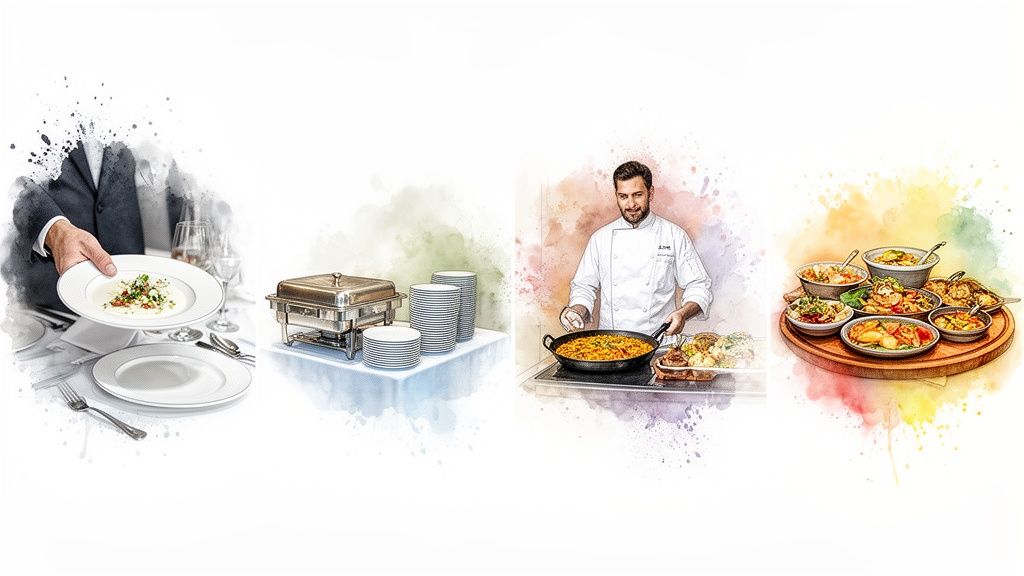
The way you serve your wedding food is so much more than just logistics; it’s the choreography of your reception. Think of the service style as the invisible director of the evening, shaping the energy, the flow, and the entire atmosphere of your celebration. Getting this right creates a seamless experience that perfectly matches the vibe you’ve been dreaming of.
From the timeless elegance of a formal plated dinner to the vibrant buzz of interactive food stations, each style tells a completely different story. This is a massive decision in the catering for wedding process because it directly influences how your guests interact, the pace of the evening, and, of course, your budget. Let’s walk through the most popular options to find the perfect fit for your Spanish wedding.
The Elegance of a Plated Dinner
A plated, or seated, dinner is the classic, formal choice—it’s what comes to mind when you picture a traditional fine-dining experience. Your guests are served pre-selected, multi-course meals right at their tables by a team of professional servers. It creates a truly sophisticated and structured atmosphere, leaving perfect, uninterrupted moments for heartfelt speeches and toasts between courses.
This is the go-to for couples wanting a timeless, elegant affair where the focus is on great conversation and a refined culinary journey. You have total control over the presentation and timing, ensuring every single plate is a work of art and served at the ideal temperature.
A seated dinner is the gold standard for formal weddings. It signals to guests that they are there to be completely looked after, with every detail anticipated and every need met without them ever having to leave their seat.
While this option is often the most expensive due to the higher staff-to-guest ratio, it delivers a level of service and polish that is simply unmatched.
The Freedom of a Buffet Style
If you’re aiming for a more relaxed and sociable atmosphere, a buffet is a fantastic option. Guests are invited to help themselves from a long, beautifully decorated table groaning with a wide array of dishes. This style is brilliant for encouraging mingling and movement, as people can wander up and chat while they decide what to eat.
Buffets offer incredible variety, which makes it a breeze to cater to all sorts of different tastes and dietary needs. You can lay out a huge selection of salads, main courses, and sides, giving everyone the freedom to choose exactly what—and how much—they fancy.
- Pros: Generally more cost-effective, offers a fantastic variety of food, and promotes a relaxed, interactive environment.
- Cons: Can create queues if not managed well, requires a good amount of space, and naturally feels less formal than other options.
This is an ideal choice for larger weddings or for couples who just want to throw a big, celebratory party where guests can mix and mingle freely all night.
The Buzz of Interactive Food Stations
Think of food stations as the cool, modern cousin of the buffet. Instead of one long table, you have several smaller, themed stations dotted around your reception space. The real magic is that each station often has a chef preparing food fresh to order, right in front of your guests.
Imagine a sizzling paella station where a chef crafts Spain’s most famous dish before your eyes, a skilled cortador carving wafer-thin slices of jamón ibérico, or a vibrant tapas bar. This transforms dinner into pure entertainment, creating little hubs of activity and natural conversation starters.
It’s a brilliant way to showcase different flavours and inject a dynamic, contemporary twist into your wedding food. It keeps guests on their feet, exploring and discovering new tastes, which all adds up to a lively and unforgettable atmosphere.
The Warmth of Family-Style Dining
Family-style service strikes that perfect balance, blending the elegance of a seated dinner with the wonderfully communal feel of sharing a meal at home. Big, generous platters of food are brought to each table, and guests simply pass them around, serving themselves just like they would at a Sunday family gathering.
This style is a wonderful icebreaker. It naturally gets people talking and creates a warm, intimate, and incredibly friendly atmosphere. Everyone gets to try a bit of everything without ever leaving their seats.
For couples who want a more relaxed feel than a formal plated meal but still like the structure of assigned tables, family-style dining is the perfect middle ground. It truly embodies the spirit of a Spanish feast—generous, joyful, and shared among loved ones.
Crafting a Menu That Tells Your Story
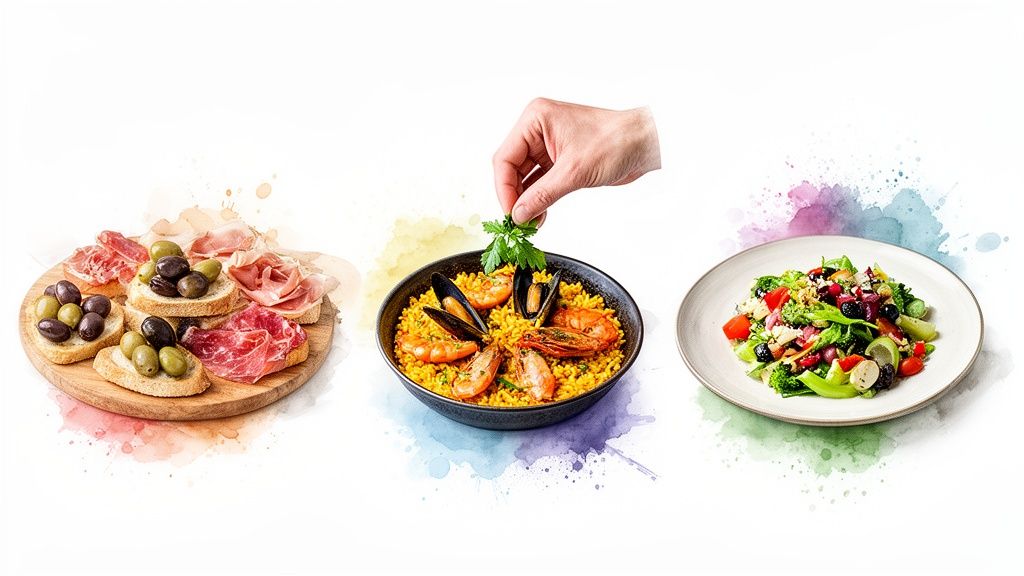
Let's be honest, the food is one of the things guests remember most about a wedding. Your menu is so much more than just fuel; it’s a chance to tell your story. It’s an opportunity to share your favourite flavours, give a nod to your heritage, or simply treat everyone to food that feels personal and incredibly special. This is where the real magic of catering for wedding celebrations comes to life.
Think of the food as part of your overall wedding design. You carefully choose flowers and music to create a certain atmosphere, right? Well, your menu does the same thing. A vibrant, modern menu can feel fun and exciting, while classic, comforting dishes bring a real sense of warmth and tradition to the day.
The whole point is to design a meal that feels like you. Whether you’re die-hard foodies who love experimenting with bold new tastes, or you both share a love for simple, rustic Spanish cooking, let your personality shine through every single course.
Infusing Local Spanish Flavours
Here on the Costa Blanca, you’re literally surrounded by some of the most incredible ingredients in the world. Using local and seasonal produce isn’t just a trend—it’s the best way to give your guests an authentic taste of the region, making your destination wedding that much more memorable.
A great caterer will be genuinely passionate about showing off the best of what Spain has to offer. This approach doesn't just guarantee incredible freshness; it also supports local producers and forges a real connection between your celebration and its beautiful setting. Want to bring a true taste of Spain to your tables? Consider these ideas:
- Interactive Tapas Stations: Think beyond the usual canapés. Imagine dedicated stations for regional specialities like sizzling patatas bravas, creamy croquetas de jamón, or fresh-off-the-grill octopus.
- A Paella Centrepiece: Nothing screams "Spanish celebration" quite like a massive, fragrant pan of paella being cooked live for your guests. It’s both a meal and a show.
- Modern Mediterranean Dishes: You could go for seared sea bass with a zesty citrus salsa, succulent Iberian pork with a sweet fig glaze, or inventive vegetarian dishes using local artichokes and peppers.
A well-crafted menu does more than just feed your guests; it immerses them in the experience. By using local ingredients, you are giving them a delicious, authentic piece of your wedding story in Spain.
Accommodating Every Guest with Care
One of the most important parts of being a great host is making sure every single guest feels welcomed and wonderfully looked after, especially when it comes to their food. Thoughtfully managing allergies and dietary preferences is no longer an afterthought; it’s a non-negotiable part of excellent service.
The key to a smooth dining experience is clear communication. The easiest way to handle this is by adding a little section for dietary requirements on your wedding invitations or RSVP website. This gives you a clear picture of what you need to plan for well in advance.
Once you have that information, get organised. Put together a detailed list and share it with your caterer. Any professional team worth their salt will not only prepare delicious alternatives but will also have a solid system in place to ensure the right meal gets to the right person without any fuss. For more tips on this, check out our guide on catering that complements the celebration.
Common Dietary Needs to Plan For
It's very likely your guest list will include a variety of dietary needs. Being ready for the most common ones shows you’ve really thought about everyone.
- Vegetarian & Vegan: It's essential to offer creative, flavourful plant-based options. Think beyond a boring salad and instead imagine a rich wild mushroom risotto or roasted vegetable stacks with a vibrant romesco sauce.
- Gluten-Free: Many guests may need gluten-free meals due to coeliac disease or an intolerance. A good caterer can easily adapt sauces and use alternative grains to create dishes that are both safe and delicious.
- Allergies: This is the big one. Serious allergies to nuts, dairy, or shellfish must be handled with extreme care to prevent any cross-contamination in the kitchen.
Taking a proactive approach to everyone's dietary needs means a stress-free and enjoyable meal for all, leaving your guests free to focus on what really matters—celebrating with you.
Navigating the Catering Timeline and Tasting Process
So, you’ve picked your caterer. Wonderful! Now the real fun begins. This next stage is all about bringing your ideas to life, transforming your vision into a concrete plan that unfolds smoothly from the day you book to the big day itself. Knowing the steps helps you stay organised and feel in control, making sure every delicious detail is perfect.
Think of your catering timeline as a roadmap, with key milestones that prevent any last-minute panic. For a destination wedding on the Costa Blanca, where the best suppliers are always in high demand, getting a head start is absolutely crucial. And it's a smart move, given the incredible growth in Spain's destination wedding scene. Event catering is the biggest piece of a market expected to jump from USD 2.57 billion to USD 3.95 billion by 2033, a trend that constantly sparks new ideas in food and service. You can dive deeper into these catering market insights to get a feel for this dynamic environment.
Key Milestones in Your Catering Journey
The path from signing the contract to the final toast is surprisingly straightforward when you know what to expect. Keeping these key dates in mind is the secret to a seamless, even enjoyable, planning process—which is exactly what you want when organising catering for a wedding.
Here's a typical timeline that we see work time and time again:
- Book Your Caterer (9-12 Months Out): As soon as your venue and date are locked in, get your caterer booked. The best teams get snapped up fast, especially during the gorgeous peak wedding season in Spain.
- Schedule Your Tasting (4-6 Months Out): This is your chance to actually sample the menu, get a feel for the chef’s style, and make those final, delicious decisions on your dishes.
- Finalise Menu & Rentals (3-4 Months Out): Right after the tasting, you’ll lock in your menu choices. This is also the perfect time to confirm any rentals you might need, like upgraded linens, specific chairs, or unique tableware.
- Provide Final Guest Count (2-4 Weeks Out): Your caterer will need a firm, final headcount to order fresh ingredients and schedule the right number of staff. This is usually due right after your RSVP deadline passes.
- Confirm Final Details (1-2 Weeks Out): A final chat to go over the day’s timeline, the floor plan, and any last-minute logistics ensures everyone is on the same page. No surprises!
The Art of the Menu Tasting
Let's be honest, the menu tasting is one of the best parts of wedding planning. It’s a sensory sneak peek of your reception, giving you a real taste of the food, presentation, and service. But it’s more than just a fantastic meal; it's a crucial working session with your chef.
The tasting is your most important creative meeting. Come prepared with an open mind, a healthy appetite, and a willingness to give clear, constructive feedback. This is how a good menu becomes your perfect menu.
To get the most out of your tasting, pay attention to the little things. It's not just about flavour. Think about the textures, the colours, and how each dish is plated. Does it fit the vibe and formality of your wedding? This is your moment to fine-tune every single element.
Providing Constructive Feedback
Your feedback is the magic ingredient that turns a sample menu into your bespoke wedding menu. The goal is to be specific and helpful, not just to say you "like" or "don't like" something.
- Be Specific: Instead of saying, "I'm not sure about the sauce," try something like, "Could the sauce be a little less salty? Maybe with some more fresh herbs?"
- Talk About Portions: Are the serving sizes right? You want your guests to feel satisfied and happy, but not so full they can't hit the dance floor later.
- Ask About Flexibility: If one part of a dish isn't quite working for you, ask about alternatives. A great chef will have a pocketful of ideas, like swapping a vegetable or adjusting a spice.
By following this timeline and heading into your tasting with a collaborative spirit, you’re setting the stage for a flawless culinary experience that you and your guests will be talking about for years.
Managing Logistics from Contracts to Coordination
An incredible wedding meal doesn't appear out of thin air. Long after you've chosen the perfect menu, the real behind-the-scenes work kicks into high gear. This is the world of logistics—the contracts, coordination, and constant communication that ensure every detail comes together on the day.
Think of it like conducting an orchestra. Your caterer, venue manager, planner, and florist each have a crucial part to play. For the final performance to be flawless, they all need to be working from the same sheet music, perfectly in sync.
Decoding Your Catering Contract
Before you sign on the dotted line, it's absolutely vital to read and understand every word of your catering contract. This document is the blueprint for your wedding reception, spelling out exactly what you're getting, when, and for how much. Taking the time to review it now is your best defence against any unwelcome surprises later.
A good contract leaves no room for doubt. Don't ever feel shy about asking for clarification on something that seems confusing. A professional and reputable caterer will be more than happy to walk you through it, line by line.
Make sure these key elements are clearly covered:
- A Detailed Breakdown of Costs: The contract must list every single charge. This includes the per-person menu price, staffing fees, equipment rentals, and any taxes, like Spain's 10% IVA on food and beverage services.
- The Cancellation Policy: Life happens. You need to know the financial implications if you have to postpone or cancel, and likewise, what the caterer’s policy is if they have to do the same.
- Liability Insurance: Your caterer absolutely must have their own liability insurance. It’s a non-negotiable that protects everyone involved should an accident happen.
- Final Numbers and Payment Schedule: Pay close attention to the deadline for submitting your final guest count. The contract should also clearly outline the payment schedule, from the initial deposit to the final balance.
Think of your contract not as a restrictive set of rules, but as a tool for getting on the same page. It ensures you and your caterer share the exact same vision for your wedding day, which is the foundation for a brilliant partnership.
The Power of Supplier Coordination
A truly great catering team does so much more than just cook. They are master collaborators. Seamless coordination between your caterer, your venue, and your other suppliers is what elevates a wedding from good to absolutely unforgettable. This is especially true when you're working with unique wedding venues in Spain, like private villas or historic fincas on the Costa Blanca, which often have their own specific rules.
Your caterer needs to know the venue inside and out. Are there restrictions on using open flames for that live-cooking paella station you want? What time can they access the property for setup, and when do they need to be cleared out? These details are mission-critical.
Key Questions to Ask Your Wedding Caterer
To help you get all the essential information upfront, we've put together a checklist of crucial questions to ask potential caterers. Having these answers will give you clarity and confidence before you sign any contracts.
| Category | Question to Ask |
|---|---|
| Costs & Payments | Can you provide a detailed, itemised quote? What is included in the per-person price? |
| Costs & Payments | What are the payment terms and schedule? Is the deposit refundable? |
| Food & Menu | Can we customise the menu or are we limited to set packages? |
| Food & Menu | How do you handle dietary restrictions and allergies? Is there an extra charge? |
| Logistics & Staffing | Have you worked at our venue before? If not, will you do a site visit? |
| Logistics & Staffing | What is your staff-to-guest ratio for a seated dinner versus a buffet? |
| Rentals & Equipment | Are tables, chairs, linens, glassware, and cutlery included in your price? |
| Legal & Insurance | Can you provide a copy of your liability insurance and food handling licenses? |
| Contingency Plans | What is your backup plan for bad weather if our event is outdoors? |
| The Big Day | Who will be our main point of contact on the wedding day itself? |
Going through these questions ensures that you and your caterer have discussed every important aspect of the service, leaving nothing to chance.
Essential Coordination Checkpoints
To guarantee a smooth operation, your wedding planner or catering manager will typically oversee several key logistical points. A professional team will proactively tick these boxes.
- Venue Site Visit: Your caterer should visit the venue well in advance to assess the kitchen facilities, check for power and water access, and map out the best flow for staff.
- Staffing Ratios: The contract should specify staffing levels. For a seated dinner, a good ratio to look for is one server for every 10-12 guests, which ensures attentive service.
- Timeline Integration: The food service timeline needs to slot perfectly into the rest of the day’s schedule. This means coordinating with your photographer to make sure you're not whisked away for sunset photos just as the main course is served, and with your DJ for cues.
- Setup and Breakdown: Everyone needs to be clear on when the catering team can arrive for setup and by what time the venue needs to be completely cleared. This prevents logistical traffic jams with other suppliers like your band or florist.
By focusing on these pillars—a crystal-clear contract and proactive coordination—you build a strong foundation for a flawless event. This is the invisible ingredient that lets you step back, relax, and savour every moment of the incredible meal you've so thoughtfully planned.
Your Top Wedding Catering Questions, Answered
Stepping into the world of wedding catering can feel a little daunting, especially when you’re planning from afar for a destination wedding in Spain. It’s totally normal to have a long list of questions! Getting clear answers early on is the key to making confident choices and keeping the whole process enjoyable and stress-free.
Let’s walk through some of the most common queries we get from couples planning their big day here on the beautiful Costa Blanca. Think of this as your cheat sheet for navigating the journey, from booking your team to sorting out the nitty-gritty details.
How Far in Advance Should We Book Our Wedding Caterer?
If you’re getting married on the Costa Blanca, especially during the peak season from May to September, you’ll want to book your caterer 10 to 14 months ahead of time. Honestly, the best culinary teams get snapped up incredibly fast.
Locking in your caterer this early does more than just secure your date. It gives you plenty of breathing room for the fun stuff—like menu planning and tastings—without that last-minute scramble. It’s one of the first big vendors you should book right after you’ve found your perfect venue.
What’s Actually Included in the Per-Person Price?
When you see a 'per-person' price, think of it as a starter package that covers the absolute essentials for your wedding meal. It’s designed to bundle the core services into one tidy number.
Typically, this price tag includes:
- The Food: This is everything from the canapés during your cocktail hour right through to the main meal itself.
- Basic Beverages: Generally covers the wine, beer, water, and soft drinks served with dinner.
- Service Staff: You’ll get the team of chefs, servers, and bartenders needed to make the magic happen.
- Standard Tableware: This includes all the plates, cutlery, glassware, and basic table linens.
It's so important to ask what isn't included. Things like the open bar (known here as the barra libre), the wedding cake, late-night snacks, or premium linens are almost always extra. Make sure you get a clear picture of these potential add-ons so you can budget for them.
How Do We Handle Catering at a Private Villa?
Having your wedding at a private villa is a dream, but it definitely requires a bit more planning on the catering front. Unlike a purpose-built venue, a villa probably won’t have a professional kitchen, so your caterer needs to know exactly what they’re working with.
For a villa wedding, a full-service caterer is non-negotiable. They'll likely need to bring in their own mobile kitchen or at least supplement the villa’s equipment to guarantee everything is cooked perfectly. You’ll also need to work with the villa owner and your caterer to sort out the practicals—think power sources, water access, and where all the rubbish will go. A little extra coordination here ensures a seamless experience on the day.
Can We Bring Our Own Alcohol?
This is a big question, and the answer really varies from one caterer to another here in Spain. Some might let you bring your own wine and just charge a "corkage fee"—a set price per bottle that covers their team chilling, opening, and serving it for you.
However, many caterers won't allow it at all, often because of strict licensing laws and liability issues. It’s a conversation you need to have right at the start. To be honest, it’s usually much simpler (and safer) to just go with your caterer’s beverage packages. They’re perfectly designed to match the food and keep the service flowing smoothly.
Planning a celebration requires meticulous attention to detail and flawless execution. At EventBliss, we specialise in transforming your vision into an unforgettable reality, managing every element so you can simply enjoy the moment. Discover how our expert planning and coordination services can bring your perfect day to life at https://eventbliss.com.