

Picture this: saying your vows with the sun warming your skin, surrounded by historic architecture or overlooking the Mediterranean. That's the magic of a Spanish wedding, and this guide is your personal roadmap to making it happen. We'll walk you through every step of planning a wedding in Spain, breaking it all down into simple, manageable stages.
Your Spanish Wedding Dream Starts Here
There’s a reason so many couples are choosing to get married in Spain. It's that incredible mix of vibrant culture, stunning scenery, and genuine, warm hospitality. It's no surprise that Spain is a top spot in the booming destination wedding market, which was valued at USD 47.69 billion in 2025 and is expected to hit a staggering USD 137.16 billion by 2029.
With over a decade of experience planning weddings here in beautiful Alicante and across the Costa Blanca, we’ve learned a thing or two. We'll start you off with a realistic timeline to keep things on track and give you an initial budget framework so you can feel financially confident from the get-go.
The Two Paths To Saying 'I Do' In Spain
Right at the start, you have a fundamental choice to make: will your ceremony in Spain be legally binding, or will it be a symbolic blessing? This decision really sets the course for your entire planning journey.
- Legally Binding Civil Ceremony: This is the official, government-recognised route. The catch? It comes with some pretty strict residency rules that make it tricky for most international couples. In most cases, at least one of you needs to have been a legal resident in Spain for a minimum of two years.
- Symbolic Ceremony or Blessing: This is, by far, the more popular and flexible option. You handle all the legal paperwork back in your home country, either before or after your trip. Then, you have a beautiful, personalised ceremony in the Spanish setting you've been dreaming of. It gives you complete creative freedom without any of the bureaucratic headaches.
The overwhelming majority of our clients choose a symbolic ceremony. It cleanly separates the legalities from the celebration, letting you pour all your energy into creating a day that’s personal, meaningful, and completely focused on you.
Getting Started: Your Initial 12-18 Month Timeline
A relaxed and joyful destination wedding all comes down to good timing. Giving yourself at least 12 to 18 months is the sweet spot. This comfortable timeframe means you'll have your pick of the best venues and vendors without feeling rushed. Just as importantly, it gives your guests plenty of time to plan their travel and get excited for the trip.
To get the ball rolling, here is a high-level look at the key stages, from those first exciting ideas to the final preparations.
Your Initial Spanish Wedding Planning Timeline
This table gives you a bird's-eye view of the major milestones you'll want to hit as you begin your planning journey.
| Timeframe | Key Action Items |
|---|---|
| 12-18 Months Out | Define your vision and style. Set a realistic budget. Create an initial guest list. Research Spanish regions and venue types. |
| 10-12 Months Out | Finalise your guest list. Choose and book your venue. Book your wedding planner (if using one). Send out 'Save the Dates'. |
| 8-10 Months Out | Begin searching for and booking key vendors: photographer, videographer, caterer, and entertainment. |
| 6-8 Months Out | Start planning guest accommodation and transport. Finalise floral and décor concepts. Both partners should look for wedding attire. |
Think of this as your starting block. Nailing down these big-ticket items early on clears the path for a much smoother process ahead.
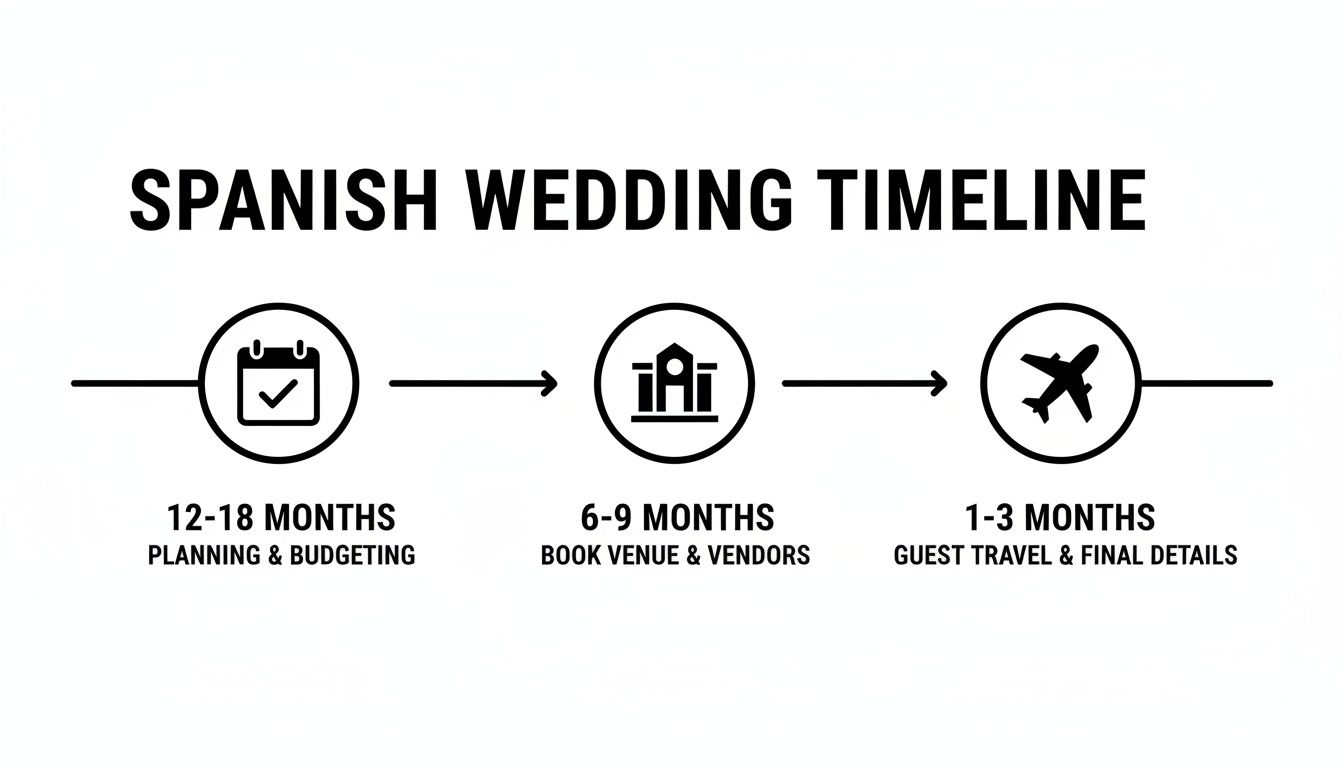
As you can see, locking in your vision and budget is the foundation for everything else. This initial phase is all about dreaming big and then mapping out the practical steps to get there, a process we explore fully in our complete guide to wedding planning from vision to 'I do'.
Navigating Spanish Wedding Legal Requirements
Let's get the legal bit out of the way first. Figuring out the paperwork for a Spanish wedding is one of the first things you need to tackle, as it dictates much of your planning journey.
For most couples dreaming of a destination wedding here, it boils down to two options: a legally binding civil ceremony or a beautiful, personalised symbolic one. The path you take makes a huge difference to your timeline and what you need to prepare.
The Civil Ceremony: A Tricky Path for Non-Residents
For a marriage to be legally recognised in Spain, there's a significant hurdle: at least one of you must have been a legal resident here for a minimum of two years. This isn't flexible. You'll need to prove it with an official certificate from your local town hall, known as the empadronamiento.
As you can imagine, this makes a legal civil ceremony a non-starter for the vast majority of international couples.
Why a Symbolic Ceremony is Your Best Friend
This is exactly why nearly every destination wedding in Spain is a symbolic one. It's the most popular, practical, and stress-free way to do it.
The concept is simple: you separate the paperwork from the party. You handle all the official, legal marriage requirements in your home country, either before you fly out or after you get back. Then, your celebration in Spain is all about you, your vows, and your guests—without any of the bureaucracy.
This gives you total creative freedom. Your Spanish ceremony can be crafted to perfectly reflect you as a couple. A professional celebrant can help you write personal vows, weave in meaningful readings, or include special rituals. There’s no script, just a heartfelt celebration of your love in a stunning setting.
By handling the legal marriage at home, you sidestep all the bureaucratic headaches in Spain. No long waits for paperwork, no wrestling with complex document submissions, and zero residency worries. Your focus stays where it should be: on creating an unforgettable day.
Essential Paperwork for Your Wedding at Home
Even with a symbolic ceremony in Spain, you still have the legal marriage to sort out back home. It’s always best to get a head start on this. The exact requirements depend on your country, but a few documents are almost always on the list.
- Full Birth Certificates: Make sure you have the original, long-form versions.
- Valid Passports: Double-check the expiry dates to ensure they’re valid well past your wedding date.
- Certificate of No Impediment (CNI): This is an official document that proves you are legally free to marry. You typically get this from your local registry office or embassy. Be mindful that it often has an expiry date, so timing is key.
My advice? Start gathering these documents early. Chasing up official copies can sometimes take weeks, and you don’t want it holding you up.
A Quick Word on Translations and Apostilles
Now, on the off chance you do meet the residency rules for a legal ceremony, be prepared for some extra steps. Any official documents from outside Spain will need to be professionally handled.
First, they must be translated into Spanish by a government-approved sworn translator, known as a traductor jurado.
On top of that, your documents will almost certainly need an Apostille stamp. This is an internationally recognised certificate that verifies your document is legitimate for use in other countries. It essentially proves that the signature and seal on your paperwork are the real deal.
For instance, a couple from the UK would need to get their birth certificates and CNI apostilled by the UK's Foreign, Commonwealth & Development Office. Only then could a sworn translator in Spain get to work. It’s a multi-stage process that adds time and cost, which is another great reason why the symbolic route is the smoother, more popular choice.
Budgeting And Finding Your Perfect Venue
Once you’ve navigated the legal paperwork, you can dive into the two most exciting parts of planning a wedding in Spain: figuring out your budget and finding that one perfect venue. These two decisions go hand-in-hand. Honestly, the venue you fall in love with will have the biggest impact on your total spend.
Think of your budget as your wedding roadmap. It gives you clarity and confidence, helping you decide where to spend and where to save. Getting this right from the start is the key to a stress-free planning journey, preventing those nasty surprise costs that can derail the fun.
Deconstructing Your Spanish Wedding Budget
So, what’s the magic number? How much does a wedding in Spain actually cost? The truth is, it varies wildly. An intimate gathering for 30 in a rustic countryside finca will look very different financially than a lavish 150-guest affair at a five-star hotel in Marbella.
What’s more helpful is understanding where your money is likely to go. Here’s a general breakdown I use with my clients to help them get started.
Sample Spanish Wedding Budget Breakdown
This table gives you a rough idea of how to allocate your funds for a typical destination wedding in Spain. It’s a great starting point for prioritising what matters most to you.
| Expense Category | Estimated Budget Percentage |
|---|---|
| Venue, Food, & Drink | 45% – 55% |
| Photography & Videography | 10% – 15% |
| Entertainment (Music, DJ) | 8% – 12% |
| Attire & Rings | 5% – 10% |
| Flowers & Décor | 8% – 10% |
| Planner or Coordinator | 10% – 15% |
| Miscellaneous (Invites, Favours) | 3% – 5% |
As you can see, the venue, food, and drink typically eat up about half of the entire budget. That’s why getting this one decision right is so fundamental—it truly sets the foundation for everything else.
Exploring Venue Styles In The Costa Blanca
The Costa Blanca, with its sun-drenched coast and charming inland villages around Alicante, is packed with spectacular and diverse venues. Each style offers a completely different vibe for your big day.
- Fincas: These are the traditional Spanish country estates you dream of, often surrounded by fragrant olive groves or vineyards. They ooze rustic charm, offer complete privacy, and usually give you the flexibility to bring in your own suppliers. It’s a true blank canvas.
- Haciendas: A bit grander and more historic than fincas, haciendas are large estates with stunning courtyards and incredible architectural character. Perfect for couples wanting a touch of timeless Spanish elegance.
- Boutique Hotels & Resorts: If you want a seamless, all-in-one experience, the luxury hotels along the coast are a fantastic choice. They offer breathtaking sea views, on-site accommodation for all your guests, and have experienced event teams who will handle every last detail for you.
Your venue choice does more than just provide a pretty backdrop; it sets the entire tone for your wedding day. Ask yourselves: what kind of experience do we want for our guests? Is it relaxed and rustic, or glamorous and modern? Answering that will instantly help you narrow down the search.
Interestingly, the wedding scene in Spain is seeing a real shake-up. In 2024, Gen Z weddings jumped to a massive 18% of all ceremonies here, up from just 1% in 2023. This youthful wave is bringing bolder, bigger celebrations to the forefront, with Gen Z couples globally averaging 131 guests. You can dive deeper into these trends by reading the full 2025 Global Wedding Report.
Essential Questions For Your Venue Tour
Whether you're visiting in person or doing a virtual tour from home, you need to go in armed with a solid list of questions. Don't be shy about digging into the nitty-gritty details—the venue coordinator is there to help, and their answers will save you from headaches later.
Key Questions to Ask:
- What’s your capacity for a seated dinner versus a standing reception? This will immediately tell you if your guest list will work.
- Are there any noise restrictions or a hard "music off" time? This is a deal-breaker for many couples, especially at outdoor venues near residential areas.
- What, exactly, is included in the hire fee? Get specific. Are tables, chairs, linens, and staff included or are they extra?
- Do you have a list of exclusive vendors we have to use? This really impacts your flexibility and budget, so it’s a crucial one to ask.
- What's your Plan B for bad weather? For any outdoor ceremony or reception, a solid, non-negotiable backup plan is an absolute must.
Getting clear answers to these questions will empower you to compare venues properly and make a decision you feel great about. This is a huge step, and we've put together an even more detailed guide on finding the perfect venue for your event that walks you through the whole process. Your dream Spanish setting is out there
Assembling Your Dream Team Of Wedding Vendors
Your venue might set the stage, but it's your vendors who bring the magic. Think of them as the artists and creators who will shape the entire experience of your wedding day in Spain. From the photographer who captures those unscripted moments to the caterer who designs a menu your guests will talk about for years, this team is everything. Getting this part right is absolutely critical, especially when you're planning from another country.
The best vendors do more than just provide a service; they become your trusted experts on the ground. They’re the ones who make sure every single detail flows together seamlessly, leaving you free to actually soak it all in and enjoy your own wedding. They are, in essence, your co-creators for a day that feels completely and authentically you.

Finding Your Key Players
Sourcing reliable, top-tier vendors from abroad can feel like a huge task, but there are a few tried-and-true methods we always recommend. Unsurprisingly, your wedding planner is your single greatest asset here. They have a little black book filled with vetted professionals they trust implicitly, which can save you countless hours of scrolling and second-guessing.
If you’re tackling the search on your own, here’s where to start:
- Curated Wedding Directories: Websites like Bodas.net are the go-to resource in Spain. It's the local equivalent of The Knot and a fantastic place to find suppliers in any region.
- Instagram & Pinterest: This is where you get to see their work in action. Use specific hashtags like #bodasalicante (Alicante weddings) or #spanishweddingphotographer to discover vendors whose style just clicks with yours. It’s the perfect way to vet aesthetics for photographers, florists, and decorators.
- Venue Recommendations: Always ask your venue for their list of preferred suppliers. These are people who know the property inside and out, which can be a massive advantage for logistics on the day.
Vetting Vendors For A Destination Wedding
Once you’ve got a shortlist, the real work begins. It’s not just about a pretty portfolio; you need to know about their experience, their communication style, and their ability to work with international couples. You’re looking for a team that gives you confidence and makes you feel heard, even from thousands of miles away.
Before you even think about signing a contract, schedule a video call. This is non-negotiable. It’s your chance to see if you actually vibe with them. Do they seem genuinely excited about your vision? Are they organised and clear in their communication? That initial chemistry check is vital for building the trust you'll need.
"What stands out most is her warmth, empathy, kindness, optimism, and energy—because on one of the most important days of your life, you need to feel calm, trust the person in front of you, and feel completely at ease."
This real testimonial for a Spanish wedding photographer says it all. You're not just hiring someone for their skills; you're inviting them into one of your most personal days.
Questions You Must Ask Potential Vendors
Don't ever feel shy about asking detailed questions. A true professional will be happy to answer them. The goal here is to get total clarity on their process and make sure there are no unwelcome surprises later on.
Essential Questions for Any Spanish Vendor
- Have you worked with international couples before? This is huge. It tells you they understand the nuances of remote planning.
- Can you share a full gallery or portfolio from a wedding similar to ours? A highlights reel is one thing; a full gallery shows you the consistency of their work from start to finish.
- What is your communication process like leading up to the wedding? You need to know how and when you'll hear from them.
- What is your backup plan for illness or an emergency? Professionals always have a Plan B.
- Are travel and accommodation costs included in your quote? If a vendor is travelling from another part of Spain, this needs to be crystal clear to avoid hidden fees.
- Can you provide a detailed breakdown of what your package includes? Get the specifics in writing—hours of coverage, number of photos, specific deliverables, etc.
Hiring the right people is about more than just their talent; it’s about finding personalities that elevate your event's unique atmosphere. For more tips on this, our guide on booking talent that truly fits your event goes into even greater detail.
Remember, your vendors will be by your side all day. Choosing people you genuinely connect with and whose work you adore is the final, crucial ingredient for a perfect celebration.
Looking After Your Guests: The Secret to a Memorable Spanish Wedding
When you're planning a destination wedding in Spain, your guests' experience doesn't start when the music does. It begins the moment they book their flights. You’re asking them to travel for your celebration, so thinking through their journey from start to finish is what separates a good wedding from an unforgettable one. The goal? Make their trip so smooth and enjoyable that all they have to worry about is what to pack.
This focus on creating a beautifully hosted event has become more and more important. Couples are often marrying a bit later in life now and want to make sure their friends and family feel truly looked after. In fact, in 2023, Spain recorded the EU's highest mean age for women at their first marriage, at 36.9 years—a huge jump from 28.9 back in 2003. This shift often means couples are more established and place a higher value on making their guests feel exceptionally welcome. You can actually discover more insights about marriage trends in Spain if you're curious about the data.
Sorting Out Accommodation
First things first: where will everyone stay? While your guests will book their own rooms, you can lift a huge weight off their shoulders by doing the initial legwork.
A great starting point is to negotiate a room block at one or two hotels close to your venue. This usually snags you a discounted rate and has the brilliant side effect of keeping your guests together, which really builds that fun, communal atmosphere before the big day even arrives.
If you want to offer a more authentic Spanish experience, especially in a region like the Costa Blanca, think about curating a list of local villas or charming boutique guesthouses. Pop a handful of vetted options across different price points onto your wedding website. It gives people choice but saves them from falling down a rabbit hole of online reviews.
Making Transport a Breeze
Trying to get around in a new country can be a headache. Taking that stress away is one of the kindest things you can do for your guests.
- From the Airport: Consider organising a shuttle service for the main arrival day, or at the very least, provide crystal-clear instructions for transfers. Include things like estimated taxi fares, phone numbers for reliable local car services, and simple public transport routes on your website.
- On the Wedding Day: This one’s a biggie. Arranging coaches to ferry everyone from the main hotels to the venue and back again is, in our opinion, non-negotiable. It means everyone arrives on time and, more importantly, can relax, have a glass of Cava, and not worry about navigating Spanish roads after the party.
A well-thought-out transport plan is the backbone of a fantastic guest experience. It shows you’ve considered their comfort and safety from the get-go, letting them switch off and just enjoy the celebration.
The Art of the Welcome
Those little touches that make your guests feel special from the moment they check in? They set the tone for the whole weekend.
A gorgeous welcome bag is a classic for a reason, but let's make it Spanish. Ditch the generic stuff and fill it with a taste of the region. A miniature bottle of local olive oil, a bag of turrón from Alicante, a chic fan for the heat, and, of course, a personal welcome note with the weekend's itinerary.
Extending the celebration with a couple of extra events is another fantastic way to get everyone mingling.
A Few Ideas for Pre and Post-Wedding Fun:
- Welcome Tapas Night: Host a super casual get-together the night before the wedding at a local tapas bar. It’s the perfect, low-pressure way for guests to meet each other before the main event.
- Post-Wedding Brunch: Nothing beats a relaxed brunch or a poolside paella party the day after. It’s your chance to properly catch up with everyone and relive the best moments before they all head home.
Ultimately, it’s these thoughtful details that turn your wedding day into an incredible shared holiday for everyone you love. It's about creating a warm, seamless experience that makes every single guest feel like a cherished part of your story.
Answering Your Questions About Planning a Spanish Wedding
Even with the most organised timeline, questions are bound to pop up when you're planning a wedding from another country. I've heard them all over the years! Here are some of the most common queries I get from couples, with clear, straightforward answers to help you feel confident as you move forward.

When Is The Best Time Of Year To Get Married In Spain?
Picking the perfect time of year for your Spanish wedding really comes down to the kind of atmosphere you're picturing. Spain is fantastic because its climate is so varied, giving you beautiful options no matter the season.
The peak season, from late May through September, is incredibly popular for a reason. You're almost guaranteed glorious sunshine and long, balmy evenings—that classic Mediterranean dream, especially in places like the Costa Blanca. The trade-off, of course, is that venues and suppliers are in high demand. This means prices are at their peak and you need to lock everything down well in advance.
For a great balance of beautiful weather and better value, I always suggest looking at the shoulder seasons. April, May, and October usually offer warm, sunny days without the blistering heat of midsummer. You’ll find more availability, potentially lower costs, and a much more relaxed vibe. Don't rule out a winter wedding, either. It can be uniquely magical, particularly in southern cities like Seville or Málaga, offering an intimate and cosy feel that’s truly special.
How Do We Handle Payments To Spanish Vendors From Abroad?
Managing international payments often sounds more daunting than it actually is. The good news is that most professional wedding suppliers in Spain work with international couples all the time and have their systems sorted.
The most common way to pay is via an international bank transfer using an IBAN (International Bank Account Number). My top tip here is to skip your traditional high-street bank to get better exchange rates and minimise fees.
- Wise (formerly TransferWise): They're known for being transparent with their fees and offering excellent, mid-market exchange rates.
- Revolut: Another great option for competitive rates and easy international transfers right from their app.
Some vendors might also take credit cards, but it's always worth asking if they add a processing fee, which is usually 1-3%. Before you send a single Euro, make sure your contract clearly outlines the payment schedule, the exact amounts due, and that all transactions will be in Euros (€). This is also something a good planner can manage for you, taking one more thing off your very full plate.
Can We Incorporate Spanish Traditions Into Our Wedding?
Absolutely! And you definitely should. Weaving authentic Spanish traditions into your day is a beautiful way to honour the location and give your guests an experience they'll never forget. It adds a layer of cultural richness that makes everything feel that much more special. You can go big and theatrical or choose small, subtle touches—whatever feels right for you.
Here are a few timeless Spanish wedding customs to consider:
- The Groom's Entrance: In Spain, the groom is traditionally escorted down the aisle by his mother (la madrina), a truly touching and respected moment.
- The Thirteen Coins ('Arras Matrimoniales'): During the ceremony, the couple exchanges 13 gold coins. This symbolises their commitment to share all future assets and build a life of prosperity together.
- Flamenco & Music: Nothing says 'Spain' quite like a passionate flamenco performance during your cocktail hour or a skilled Spanish guitarist playing as guests arrive.
- Late-Night Treats: Surprise everyone with a churros and chocolate station late in the evening. It’s fun, delicious, and a very Spanish way to refuel for more dancing!
Embracing local culture doesn’t have to be complicated. Simple touches, like serving regional wines, offering local delicacies as wedding favours, or using olive branches in your floral arrangements, can beautifully connect your celebration to its stunning Spanish setting.
Do We Need Wedding Insurance For A Wedding In Spain?
While it's not a legal requirement, I strongly recommend wedding insurance for any destination wedding. Honestly, it's a non-negotiable for my clients. Think of it as your safety net, protecting your investment against the unexpected and giving you genuine peace of mind.
A good destination wedding policy will cover the big things. It can protect your deposits if a supplier goes out of business, or if you have to postpone due to a covered reason like a serious illness. It can also offer protection against extreme weather events that could make it impossible for your wedding to go ahead as planned.
The most important thing is to confirm that your policy explicitly provides cover for weddings held in Spain. Read the fine print, understand what is and isn't included, and ask questions. The small cost of a policy is such a worthwhile investment for the significant financial protection it gives you.
Planning a wedding in Spain should be an exciting adventure, not a source of stress. With over a decade of experience creating beautiful, seamless celebrations across the Costa Blanca, the team at EventBliss is here to handle every detail. From finding that perfect venue to coordinating trusted vendors, we bring your vision to life so you can relax and cherish every moment. Learn how we can make your dream Spanish wedding a reality at https://eventbliss.com.