

Planning a wedding in a place as beautiful as Alicante should be pure excitement, not a source of stress. This guide is built from years of on-the-ground experience on the Costa Blanca, and I want to share that insider knowledge with you. Forget those generic, overwhelming checklists. Let’s talk about what really matters when planning your wedding here.
Your Dream Alicante Wedding Starts Here
Think of this as a conversation with a local expert who's seen it all—the stunning venues, the brilliant suppliers, and the common pitfalls to avoid. We’re going to walk through the entire process together, from your very first spark of an idea to the final toast, making sure everything feels manageable and, most importantly, fun.
The goal here is simple: to help you craft a gorgeous Spanish celebration that feels completely you. With over 300 days of sunshine a year, the Costa Blanca provides a spectacular backdrop. The real secret to a flawless event, though, is smart, thoughtful organisation.
A Practical Approach to Planning
This guide is laid out just like a real wedding plan would unfold. We won't just throw a list of tasks at you; we’ll explain the why and the when behind each step. You'll get actionable advice that puts you in control and lets you actually enjoy the journey.
We’ll cover the essentials:
- Building a realistic timeline that prevents any last-minute panic.
- Crafting a budget that makes sense for the Alicante region.
- Navigating Spanish legalities and guest logistics without the headache.
- Putting together a dream team of trusted, local vendors.
A destination wedding is so much more than a single day. It's a shared experience with your favourite people. The planning should reflect that same joy and anticipation, not feel like a chore.
By focusing on calm execution and clear communication, you can sidestep the usual hurdles. We’ll start with a solid timeline to get you moving with confidence. Of course, for those who want someone to handle every detail from start to finish, you can learn more about our dedicated destination wedding packages. This is all about turning the complex task of planning a wedding abroad into a creative and rewarding experience, ending with an unforgettable party under the Spanish sun.
Your 12+ Month Timeline: The First Big Steps
The absolute best gift you can give yourselves when planning a destination wedding is time. Kicking things off at least a year out, or even 18 months if you can, is what makes the difference between a stressful sprint and an enjoyable journey. This isn't about getting bogged down in napkin colours just yet. It's about dreaming big.
So, pour a glass of something lovely—maybe a crisp Verdejo to get in the Spanish mood—and start talking. What does your day feel like? Are you picturing a relaxed, rustic party at a countryside finca, surrounded by olive groves? Or is it more of a glamorous, modern affair with cocktails overlooking the Mediterranean?
Right from the start, your vision and your guest list are completely connected. Honestly, the number of people you invite is the single biggest factor that will shape your venue options and your budget. It’s a bit of a balancing act. A more intimate guest list might mean you can afford that exclusive boutique hotel, whereas a massive celebration brings its own incredible, buzzing energy. Be ruthless and create your ‘A-list’—the people you simply can't imagine getting married without.
Getting Real with Your Budget and Season
With a rough guest count and a vision in mind, it’s time to talk numbers. While a wedding in Alicante can often be more budget-friendly than a similar event back in the UK, you need to be clear-eyed about the costs from day one.
The biggest mistake I see couples make is keeping their budget as one big, scary number. You need to break it down. When you see where the money is going—venue, food, photos—you gain control. It empowers you to decide where you want to splurge and where you’d rather save.
For a beautiful wedding in the Costa Blanca with around 50-70 guests, a realistic budget to start thinking about is somewhere between €25,000 and €45,000. That might sound like a lot, but remember this usually covers the venue hire, all your food and drink (often with an open bar), and your main suppliers for the day itself.
Sample Alicante Wedding Budget Breakdown
To help you get started, here's a typical percentage-based breakdown. Think of it as a guide, not a rulebook, to help you allocate your funds.
| Expense Category | Average Percentage of Budget |
|---|---|
| Venue & Catering | 45% – 50% |
| Photography & Videography | 10% – 15% |
| Entertainment (Music/DJ) | 5% – 10% |
| Decor & Florals | 8% – 12% |
| Planner & Coordination | 10% – 15% |
| Attire & Rings | 5% – 8% |
| Contingency Fund | 5% – 10% |
This table gives you a framework for your financial conversations. That 5%-10% contingency fund, by the way, is non-negotiable. It’s your peace-of-mind fund for any unexpected costs that pop up along the way.
Picking your season is just as crucial. The Costa Blanca is famous for its 300+ days of sunshine, but there's a big difference between getting married in June versus September.
- Peak Season (June-August): You're guaranteed hot, sunny weather, but you’ll be sharing the region with plenty of tourists, and prices for venues and travel will be at their highest.
- Shoulder Seasons (May & September): This is the sweet spot for many couples. The weather is gorgeous and warm—perfect for an outdoor ceremony—but you miss the scorching heat and peak-season crowds.
- Off-Peak (April & October): You can find some amazing deals and the region feels much more intimate. The weather is often still lovely, but it’s smart to have a solid Plan B in case of a stray shower.
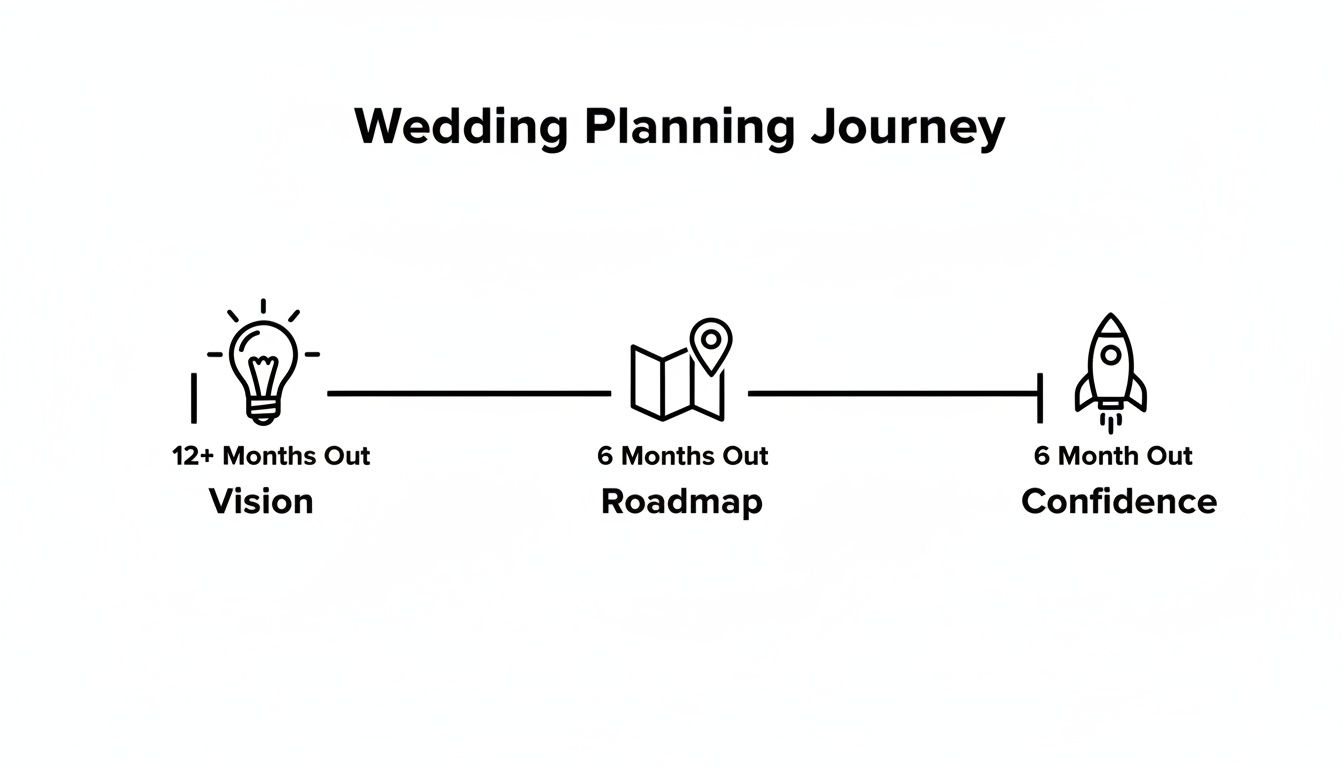
Breaking the journey down like this helps you see the process as a series of exciting decisions, not an overwhelming to-do list.
Locking In Your Planner and Venue
With your budget range and preferred season sorted, you need to lock in your two most important players: your wedding planner and your venue. For the best options, you absolutely have to do this 12 to 18 months before your date. The best people and places get booked up fast.
Trust me on this: a good planner is the best investment you’ll make. They are your person on the ground, your translator, your negotiator, and your creative sounding board. They’ll save you from endless hours of Googling and prevent you from making costly cultural missteps, instantly connecting you with a network of trusted suppliers who fit your vibe.
At the same time, you'll start the exciting hunt for your venue. Whether you're dreaming of a historic castle, a private villa, or a chic beach club, your planner will present a shortlist that actually fits your guest count and budget. They’ll arrange viewings—either virtual or in person—and help you see the potential in each space.
For more help getting all your tasks in order, have a look at our guide on preparing a wedding checklist. Using a good event planning checklist template from the get-go can also be a massive help.
Once you’ve secured these two cornerstones, everything else starts to fall into place. With your expert guide and dream location booked, you’ve built a solid foundation, freeing you up to actually enjoy planning the beautiful details of your day in the Spanish sun.
Sorting Out the Spanish Wedding Legalities and Logistics
Right, you’ve got the exciting parts figured out—the vision, the vibe, the guest list. Now for the nuts and bolts. This is where many couples start to feel a little overwhelmed by the paperwork and planning, but trust me, getting the legal and travel details sorted for your Spanish wedding is much simpler than you think.
Let’s get the big legal question out of the way first. Getting legally married in Spain when you’re not a resident is, to put it mildly, a bureaucratic nightmare. The process can be incredibly long and complex, often requiring at least one of you to be a legal resident for a certain period and to register on the local 'padrón' (a process called 'empadronamiento').
Frankly, it’s a headache you don’t need.
That's why the vast majority of international couples do what I've recommended for years: handle the legal bit at home. A quick trip to your local registry office before or after you fly out to Spain is all it takes. This one simple move strips away a mountain of stress and paperwork, freeing you up to focus on the celebration itself.
Why a Symbolic Ceremony is the Way to Go
Once the legal marriage is signed and sealed back home, you have total creative freedom for your Alicante celebration. You can hold a beautiful, deeply personal symbolic ceremony anywhere you can imagine. It’s the secret to unlocking the most incredible venues, from the gardens of a rustic finca to a private beach at sunset, without worrying about official licenses.
A symbolic ceremony means you can:
- Write your own story. Your script can be anything you want it to be, read by a professional celebrant, a close friend, or even a family member.
- Include what matters to you. Weave in personal readings, your favourite music, or unique rituals that reflect you as a couple, with no rules to follow.
- Focus on the feeling. It’s all about sharing your vows and celebrating your commitment in a breathtaking setting, without any of the stuffy officialdom.
Think of it this way: the registry office is for the contract; Spain is for the celebration. This is the moment you declare your love in front of your favourite people in a place that feels special. Your guests won't know the difference, and you'll have saved yourselves a world of hassle.
Looking After Your Guests: Travel and Comfort
A huge part of a successful destination wedding is making the journey feel effortless for your guests. The moment they open that save-the-date, they should feel excited and looked after, not stressed about logistics.
Your save-the-dates really need to go out at least 9-12 months in advance. Crucially, they should include a link to your wedding website. This website is your command centre for all travel info. Don't just give them a date; give them the tools to start planning. Include the best airport to fly into (Alicante-Elche, ALC), suggest a few hotels at different price points, and share a rough schedule for the weekend.
It's an interesting quirk that while so many UK couples choose Spain, most online destination wedding data is geared towards the American market. So, while you can find plenty of information, it’s often not specific to planning a wedding in Europe from the UK. For a broader look at wedding trends, you might find some useful nuggets in research on popular wedding locations at ParadiseWeddings.com, but always keep your UK-to-Spain context in mind.
Adding Those Thoughtful Touches
As the day gets closer, it's the little details that show your guests how much you appreciate them making the trip. Arranging room blocks at one or two main hotels is a brilliant start. Negotiating a group rate not only helps your guests save a bit of money but also creates a lovely, central hub for everyone to socialise between events.
Here are a few other touches I’ve seen work wonders:
- Airport Transfers: If you have a big group arriving on the same flight, organising a shared minibus from the airport is a godsend. It takes all the hassle out of that first hour in a new country.
- Welcome Bags: A small welcome bag in their room is such a warm gesture. A weekend itinerary, a little map, a bottle of local wine with some Spanish crisps, and maybe a fan for the heat—it all says "we're so glad you're here."
- Clear Communication: About a week out, send a final email with a detailed timeline, key addresses (with Google Maps links!), and the number for your wedding planner or a designated contact person for any last-minute questions.
When you put this much thought into your guests' experience, you're not just planning a wedding; you're hosting an unforgettable event. It ensures everyone, including you, can truly relax and soak it all in.
Choosing Your Alicante Wedding Suppliers
Once you’ve locked in your venue and decided on the legalities, the fun really begins. It's time to build the team of creatives and professionals who will bring your wedding day to life. These are the people whose artistry you’ll see in the photographs, taste on the menu, and hear in the music that fills the air. It’s one of the most crucial parts of planning a wedding abroad.
Finding the right suppliers in the Costa Blanca is about so much more than just filling roles. It’s about finding people who get you. People who not only master their craft but also vibe with your vision and can work together as a cohesive unit. This is where a wedding planner becomes your biggest asset, connecting you with their network of trusted local talent. If you haven't found your planner yet, our guide on finding a wedding planner in Alicante is the perfect place to start.

Think of it as a partnership. Your planner brings the local knowledge and vetted contacts; you bring the vision. Together, you’ll hand-pick the perfect team for your day.
Photographers and Videographers: Your Storytellers
These are the people entrusted with your memories. Their work is what you’ll have for years to come, so finding a connection with their style is non-negotiable. When you’re looking at portfolios, ask to see a few full wedding galleries, not just a curated highlight reel.
This gives you the real picture. Do they capture those candid, fleeting moments with the same care as the big, epic portraits? Are they comfortable shooting in the brilliant Spanish sun and the low-light ambiance of your evening reception? A photographer who knows the Costa Blanca will also know the secret coves for golden-hour photos and the best viewpoints at your venue.
Once you’ve got a shortlist, schedule a video call. This isn’t just an interview; it’s a chemistry check.
- Do you actually like them? Do you feel at ease?
- Do they listen and seem genuinely excited about your ideas?
- What’s their backup plan for emergencies, like equipment failure or illness?
Remember, you’ll spend most of your wedding day with your photographer. You want to enjoy their company as much as you admire their work.
A great destination wedding photographer does more than point and shoot. They become a calming presence, a gentle director, and an expert in making you look incredible in a foreign landscape. Complete trust in them is the secret to getting those natural, authentic shots.
Caterers and Florists: The Sensory Experience
In Spain, food is everything. It's the heart of the celebration. After your venue, your caterer will likely be the biggest investment, so it’s a decision to be made carefully. Many incredible Alicante venues have exclusive catering partners, which streamlines this process beautifully.
If you’re hiring your own, ask for sample menus that highlight seasonal, local produce. A passionate chef will be thrilled to create a menu featuring fresh seafood paella cooked over an open fire, a station of hand-carved Jamón Ibérico, or a dessert bar with the region's famous turrón from Jijona. A tasting, usually arranged during a planning trip, is an absolute must.
Your florist, on the other hand, is your visual storyteller. Show them your Pinterest boards, of course, but remain open to their local expertise. A fantastic Spanish florist might suggest weaving vibrant bougainvillaea, rustic olive branches, or fragrant orange blossoms into your design—elements that are not only authentic but will hold up beautifully in the Spanish heat.
Ask Your Creative Suppliers:
- Could you show me a full wedding you worked on at a venue like mine?
- How do you incorporate local, seasonal ingredients or flowers?
- What’s your process for developing a proposal that fits our vision and budget?
This is how you ensure your wedding feels truly and authentically Alicante.
Demystifying Vendor Contracts
Found your perfect match? Brilliant. Now for the paperwork. Please, don’t just skim the contract. Your planner will go over it with a fine-toothed comb, but you need to understand it too. Most contracts will be in Spanish, but your planner should provide a translated summary highlighting the crucial bits.
Look closely at these four areas:
- The Deliverables: What are you actually getting? For a photographer, this means hours of coverage, the number of photos, and album specifics. For a caterer, it’s the full menu, staffing numbers, and exactly how drinks will be served.
- The Payment Schedule: Typically, you’ll pay a deposit of 30-50% to secure your date. The final balance is usually due a few weeks before the wedding. This is standard practice.
- The Cancellation Policy: Life happens. Know the financial implications if you have to postpone or cancel. The policy should also be clear about what happens if the vendor has to cancel.
- Travel and Expenses: If suppliers are travelling to your venue, their travel fees and any accommodation needs must be clearly stated. This prevents any nasty surprises on the final bill.
Getting these details sorted from the outset is what protects you and your suppliers. It’s the final piece of the puzzle in building a reliable, professional team you can trust to make your wedding day happen, just as you dreamed it.
Bringing Your Vision to Life: The Final Stretch
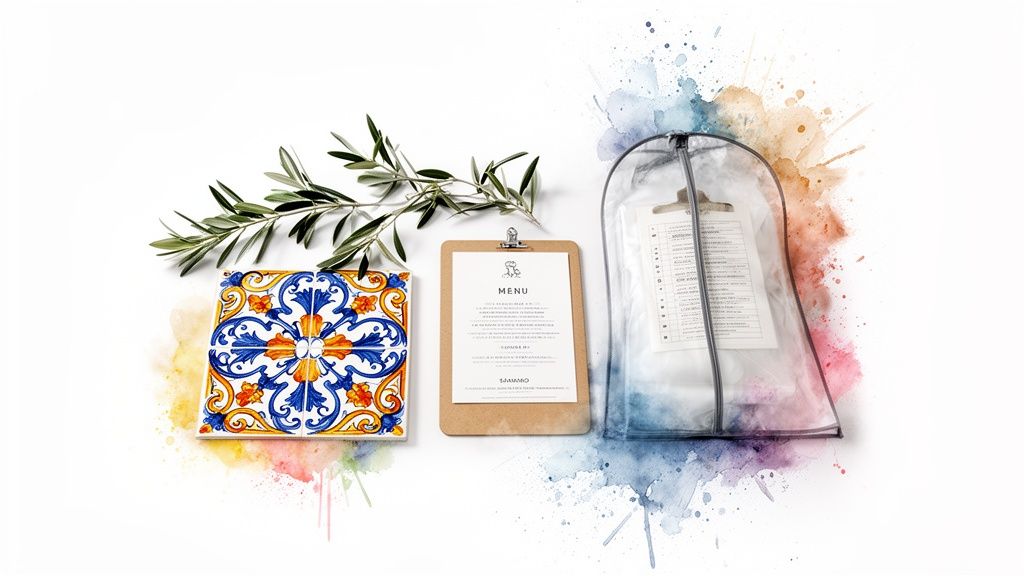
Once your venue is secured and your core team of suppliers is in place, you can finally dive into the really fun part. This is where all those daydreams of a sun-drenched Spanish celebration start to become a reality, taking shape in the colours, textures, and tiny details that make the day uniquely yours.
It’s all about creating a design that tells your story while feeling completely at home in Alicante. Don't worry, this doesn't mean you need to go over the top with Spanish flags and flamenco dancers (unless you want to!). Instead, it’s about weaving in subtle, elegant nods to the local culture.
Think about using fragrant olive branches in your floral arrangements or as a simple garnish on each place setting. I’ve seen couples use beautiful hand-painted Spanish tiles (azulejos) as distinctive place cards, which also double as a wonderful keepsake for guests. These authentic touches create a genuine sense of place that everyone will remember.
The Three-Month Mark: Finalising the Details
When you hit the three-month countdown, the pace really picks up. This is when abstract ideas turn into firm decisions and your planner starts locking in all the logistical elements with your suppliers.
One of the highlights of this period is often the menu tasting. Many couples combine this with a final planning trip to Alicante. It’s your chance to sit down with the caterer, sample the incredible local flavours, and fine-tune every part of the dining experience, from the first canapé to the late-night churros.
This is also crunch time for your guest list. You'll need to chase down any last-minute RSVPs to get that final headcount. This number is critical, as it directly impacts everything from your catering invoice and seating charts to how many chairs need to be set out for the ceremony.
Building the Blueprint: Your Day-Of Timeline
Around the two-month point, you and your planner will begin to sketch out the master schedule for the wedding day itself. This isn't just a simple running order; it's a meticulously detailed logistical plan that synchronises every single person and supplier involved.
A professional timeline goes far beyond "Ceremony at 4 pm". It's a minute-by-minute blueprint covering:
- Supplier Movements: It dictates when the florist needs access to the venue, the exact time the hair and makeup artists will start, and when the DJ needs to be set up for their soundcheck.
- The Photography Plan: It blocks out dedicated time for all the key photos—the buzz of getting ready, family portraits, and most importantly, that golden-hour session for just the two of you as the sun sets over the Mediterranean.
- Guest Flow: The schedule carefully plans for transitions, allowing enough time for guests to mingle and move from the ceremony to the cocktail reception and then on to dinner without ever feeling rushed.
- Kitchen Cues: It signals the catering team precisely when to start plating each course, ensuring every meal is served perfectly and the entire service runs like clockwork.
Your day-of schedule is the secret to a relaxed wedding. A well-constructed timeline is what allows you, your partner, and your families to be completely present and soak in every moment, knowing that everything is being handled seamlessly behind the scenes.
This document becomes the bible for the day and is shared with your entire supplier team and key members of the wedding party so everyone knows exactly what’s happening, and when.
The Final Week: Ready for "I Do"
The last seven days are about final checks, packing, and getting into the right headspace. All the big decisions are made, so this week is for tying up loose ends and ensuring you arrive in Spain feeling organised and excited.
Your planner will be on the phone, personally confirming arrival times and final details with every supplier. Your job is to focus on the journey ahead.
Here’s a simple checklist for that last week:
- Pack Your Wedding Outfits: Carefully pack your dress, suit, shoes, and all your accessories. I can't stress this enough: always carry these items in your hand luggage. Never, ever put them in a checked bag.
- Handle Final Payments: Some suppliers may require their final balance in cash on the day. Prepare this in advance, placing the funds in clearly labelled envelopes for your planner or a trusted helper to distribute.
- Assemble Welcome Totes: If you’re giving welcome bags, now is the time to put them together. A simple tote with a weekend itinerary, a bottle of local wine, some crisps, and a bottle of water is a thoughtful gesture your guests will love.
- Share the Plan: Send a simplified version of the timeline to your wedding party and immediate family. They don't need the supplier-level detail, just the key moments of where they need to be and when.
- Switch Off and Get Excited: The day before you fly, your work is done. Close the spreadsheets, have a lovely dinner, and try to get a good night's sleep. You’ve planned a beautiful celebration—now it's time to go and enjoy it
Common Questions About Alicante Weddings
As you get further into your planning, it's natural for a few big questions to pop up. Let's tackle some of the most common ones I hear from couples. Think of this as the part where we sit down, clear the air, and get you the straightforward answers you need to feel confident about your next steps.
Planning a wedding from another country can feel like navigating a maze of "what-ifs." My job is to hand you the map, based on years of experience right here on the Costa Blanca.
What Is the Best Time of Year for an Alicante Wedding?
While the Costa Blanca is blessed with over 300 days of sunshine, timing your wedding is about more than just dodging rain. It’s about creating the perfect atmosphere.
The absolute sweet spots are May, June, and September. These months give you glorious, dependable warmth without the scorching heat and peak-season crowds of July and August. You get all the benefits of the beautiful weather with a little more breathing room.
April and October are also fantastic choices, often offering better value and a more intimate feel. The weather is usually mild and lovely, though you’ll want to be sure your venue has a solid indoor Plan B, just in case a brief shower passes through.
Don't just look at weather charts; think about the feel. A wedding in May has a vibrant, fresh energy as the season kicks off. A celebration in late September has a mellow, golden glow that’s incredibly romantic.
How Much Does a Destination Wedding in Alicante Really Cost?
This is always the big one, isn’t it? The good news is that a beautiful wedding in Alicante is often more affordable than a similar celebration in the UK.
For a stylish, well-run wedding with 50-70 guests, a realistic budget to start with is between €25,000 and €45,000+.
So, what does that typically cover? You're usually looking at:
- Exclusive venue hire for your wedding day.
- Full catering, from canapés and cocktails to a multi-course meal and several hours of an open bar.
- Your core creative team: photographer, DJ, florist, and other key suppliers.
- The guidance and support of a professional planner to orchestrate everything.
The secret to keeping your budget in check is demanding a detailed, line-by-line breakdown from the very beginning. This isn't just about getting a single number; it's about understanding exactly where your money is going. That knowledge empowers you to decide where to invest more and where you’re happy to save.
Do We Need to Speak Spanish?
Honestly? No, you don't need to be fluent. But having a bilingual planner on your side is an absolute game-changer.
Many of the large-scale venues have English-speaking coordinators, which is great. The real magic, however, often comes from working with smaller, independent, and truly authentic local suppliers—the incredible florist with a tiny shop, or the guitarist who only plays traditional Spanish music. That’s where the language barrier can become a real problem.
A planner is more than a translator. They are your cultural interpreter and your advocate on the ground, ensuring every creative detail and contractual term is understood perfectly. It’s one of the single biggest stress relievers in the entire process.
How Do We Handle the Legal Paperwork?
The legal requirements for non-residents to get married in Spain can be incredibly complicated and drawn-out. It often requires proof of residency for a period of time, which just isn't practical for most couples.
Because of this, almost all my international couples choose a much simpler, stress-free path.
The most effective approach is to handle the legal side of your marriage at your local registry office back home before you travel. It’s usually a quick, simple appointment that removes a mountain of bureaucratic headaches.
This frees you up to have a beautiful and deeply personal symbolic ceremony in Spain. You can choose any location, write your own vows, and design a ceremony that is 100% about your story, without being constrained by legal scripts or official locations.
At EventBliss, turning these questions and plans into a seamless, beautiful reality is what we do best. We combine meticulous planning with elegant design to create a celebration that feels effortless for you and unforgettable for your guests. If you’re ready to start the conversation about your Alicante wedding, we’d love to hear from you. Find out more at https://eventbliss.com.