

Choosing to have your destination wedding in Italy is about so much more than just the ceremony. It’s about crafting a whole experience steeped in romance, incredible food, and that famous Italian spirit of la dolce vita. You’re essentially swapping a few hours at a standard reception for a sun-drenched long weekend in a Tuscan vineyard or a glamorous party overlooking the cliffs of the Amalfi Coast.
Why Is Everyone Getting Married in Italy?
Let’s be honest, the idea of an Italian wedding sells itself. But behind the cinematic backdrops and dreams of pasta and prosecco, what really makes it one of the top choices for couples? It’s that perfect mix of timeless romance, world-class cuisine, and an atmosphere that turns a single day into an unforgettable shared holiday.
An Italian wedding isn't just one event; it's an immersive getaway. The whole celebration becomes a mini-break where your guests feel truly spoiled. Think about it: a relaxed welcome pizza night under the stars, a ceremony with breathtaking views, and a farewell brunch with local pastries and coffee. It creates a much deeper, more connected experience for everyone involved.
Turning Your Wedding Into a Three-Day Celebration
Unlike a traditional wedding that’s over in a flash, an Italian destination wedding naturally unfolds over several days. This gives you something incredibly precious: quality time with the people who have travelled across the world to be with you.
From my experience planning these events, most couples build their celebration around three key moments:
- The Welcome Dinner: A casual, relaxed affair to greet guests as they arrive. This really sets a warm, friendly tone for the days ahead.
- The Wedding Day: This is the main event, of course! From the "I do's" to the emotional speeches, dinner, and dancing into the early hours.
- The Farewell Gathering: A lovely way to say your goodbyes. This could be anything from a lazy brunch to a fun group activity like a cooking class or wine tasting.
This multi-day approach just makes the whole thing feel less rushed and more like a shared adventure. It’s a rare chance for your different groups of friends and family to bond in a beautiful, stress-free setting.
The Numbers Don't Lie: It's a Top Choice for UK Couples
The love for Italy isn't just a feeling; it's a clear trend. For so many couples in the UK, a sun-kissed ceremony in the rolling hills of Tuscany or perched above the sparkling Amalfi Coast is the ultimate wedding goal.
To give you an idea of its popularity, recent research from American Express predicts that 17% of UK wedding guests attending a destination wedding in 2026 will be flying to Italy. That makes it the fourth most popular overseas location, hot on the heels of France, Spain, and the USA. The magnetic pull is undeniable.
Top Reasons UK Couples Choose Italy for Their Wedding
This table breaks down the key motivations behind the Italian wedding trend, helping you see how they align with your own vision.
| Key Attraction | Why It Matters for Your Wedding | What It Means for Your Guests |
|---|---|---|
| World-Class Food & Wine | Your wedding menu becomes a highlight, not an afterthought. You can build events around local culinary traditions. | They get to experience authentic, regional cuisine and wine, turning every meal into a memorable event. |
| Stunning & Diverse Scenery | From historic villas to rustic farmhouses and coastal cliffs, you're guaranteed a spectacular backdrop for your photos. | They get a holiday out of it! They can explore ancient cities, relax by the sea, or hike in the countryside. |
| The "La Dolce Vita" Vibe | The focus is on a relaxed, joyful celebration over several days, reducing stress and allowing you to soak it all in. | The atmosphere is less formal and more about connection, letting them relax and enjoy themselves fully. |
| Relatively Easy Travel | With numerous direct flights from major UK airports, it’s one of the more accessible European destinations. | Travel is straightforward and often affordable, making it easier for them to say "yes" to your invitation. |
This data simply confirms what we see on the ground: Italy delivers a unique blend of beauty, culture, and convenience that's hard to beat.
After planning dozens of weddings here, I can tell you that the unique Italian culture of hospitality is what truly elevates the experience. Your vendors—from the planner to the florist—often start to feel more like family, adding a layer of warmth you just can’t find anywhere else.
Ultimately, choosing Italy is about embracing a different wedding philosophy. It’s about prioritising amazing food, breathtaking scenery, and shared moments over rigid schedules. If you're still weighing your options, seeing how Italy compares to other popular spots in our guide to the best places to get married abroad can be really helpful.
Finding Your Perfect Italian Venue and Region
This is where the fun really begins. Choosing the right region is the first big, exciting decision that turns your dream of a destination wedding in Italy from a collection of Pinterest boards into a real, tangible plan. The entire vibe of your wedding—from the food on the table to the memories your guests take home—is rooted right here.
Italy’s landscapes are incredibly diverse, and each one brings its own distinct personality to the table. A rustic-chic wedding at an agriturismo (a traditional working farm) in Tuscany feels a world away from a glamorous affair at a cliffside hotel on the Amalfi Coast. One is all about earthy elegance and rolling hills; the other is pure drama, sea views, and sophisticated luxury.
But this choice goes deeper than just aesthetics. You need to get practical and understand the unique flavour and logistical quirks of each region.
Comparing Italy's Top Wedding Regions
So, where do you start? Let's break down the most popular spots. Think hard about the atmosphere you want to create for you and your guests, as each of these places offers something completely different.
- Tuscany: The quintessential choice, and for good reason. It’s a landscape of rolling hills, cypress-lined roads, and historic villas. This is the perfect setting for a romantic, rustic celebration that’s heavily focused on amazing food and wine. Many venues are large estates, ideal for hosting everyone for a weekend-long party.
- Amalfi Coast: If you’re after sheer glamour and breathtaking drama, this is it. Towns like Positano and Ravello serve up those iconic cliffside views of the Mediterranean. It’s an incredible region for a chic, high-energy wedding, but be warned—the logistics can be tricky with steep terrain and limited access. For a deeper dive, our guide to planning a wedding in Sorrento has some brilliant local insights.
- Lake Como: The absolute pinnacle of opulence and old-world elegance. Here you’ll find grand, lakeside villas with immaculate gardens that provide a truly cinematic backdrop. It's a premium choice, perfect for a sophisticated, black-tie affair that feels like a once-in-a-lifetime occasion.
- Puglia: Tucked away in the "heel" of Italy's boot, Puglia has a more bohemian, laid-back vibe. Its whitewashed towns and unique masserie (fortified farmhouses) create a rustic yet incredibly stylish setting. It’s often more budget-friendly than its northern counterparts and still feels a bit like an undiscovered gem.
- Sicily: For a wedding steeped in history, culture, and mind-blowing food, Sicily is completely unmatched. The venues are bursting with character, from ancient estates to coastal tonnare (old tuna fisheries). It offers a wonderfully authentic, slightly wilder Italian experience.
Practical Factors You Cannot Overlook
Beyond the beautiful scenery, a few logistical details will make or break your decision. Getting these right from the start will save you so many headaches later on.
Seasonality is everything. A huge number of destination weddings—over 50%—take place in the summer months between May and September. While that means glorious weather, it also means peak prices and venues getting booked up years in advance. Seriously consider a "shoulder season" wedding in April or October. You could save a small fortune and find that your dream venue is suddenly available.
Accessibility is another massive point. How easily can your guests get there, especially those flying in from the UK? A villa just 30 minutes from Florence Airport is a world away from one that demands a two-hour drive into the remote countryside after a long flight. Always map out the journey from the nearest international airport.
From our experience planning, the region's character truly shapes the entire event. We had a couple who chose a secluded agriturismo in Umbria, and the weekend became a relaxed retreat with cooking classes and truffle hunting. Another couple opted for Lake Como, and their event was a sequence of elegant boat trips and formal lakeside dinners. Your choice sets the tone for everything.
Matching Your Venue to Your Vision
Once you’ve settled on a region, it’s time to find the perfect venue. The most popular approach for a destination wedding in Italy is booking an exclusive-use villa or estate. This allows you and your guests to stay together for a few nights, creating that immersive "wedding weekend" experience that makes it all so special.
Don't skip the maths on venue capacity. It’s easy to fall in love with a stunning villa that sleeps 30, but if your guest list is sitting at 60, you've got a problem. While some guests can always stay in nearby hotels, having your core group on-site is what creates that unforgettable, celebratory atmosphere.
Let’s walk through a real-world scenario. Say you’re dreaming of a Tuscan wedding for 50 guests.
- Villa A sleeps all 50 people on-site. At €9,000 per night, it allows everyone to be together, creating a seamless, all-in-one celebration.
- Villa B is more affordable at €6,000 per night, but only sleeps 20. This means you’re now responsible for finding accommodation and arranging transport for 30 other guests.
Suddenly, the "cheaper" option becomes far more complicated and can fragment the experience. By carefully aligning your guest count, budget, and the atmosphere you want with the right region and venue, you lay the foundation for a flawless and truly authentic Italian wedding.
Sorting Out The Legal Side: Your Italian Wedding Paperwork
Let's talk about the paperwork. Getting married abroad always comes with a bit of bureaucracy, and Italy is no different. But honestly, with a clear plan, it’s nothing to worry about. The most important thing I tell my couples is to decide on the type of ceremony you want right at the start, as this sets the path for everything that follows.
Civil, Religious, or Symbolic? Your Ceremony, Your Choice
For most couples coming from the UK, the decision boils down to one of three routes. Each has its own set of rules and, crucially, a different paperwork trail.
Legally Binding Civil Ceremony: This is the official, non-religious ceremony that makes your marriage legally recognised back home. It’s typically held at the local town hall, or comune. Some exclusive venues have a special license to host these ceremonies on-site, which is a fantastic option if you can find one.
Religious Ceremony: If you're dreaming of a Catholic church wedding, the good news is that it can also be legally binding, provided you complete the civil paperwork alongside it. For other faiths, the religious ceremony itself isn't legally recognised in Italy, so you’d need a separate civil union to make it official.
Symbolic Ceremony: This is, by far, the most popular and stress-free option. You handle all the legal marriage formalities in the UK before you fly out. Then, in Italy, you have a beautiful, completely personal ceremony led by a celebrant. It can be anywhere you want—a vineyard, a clifftop, a private garden—with zero Italian legal requirements to worry about.
Honestly, choosing a symbolic ceremony lets you sidestep the paperwork headaches and focus entirely on the celebration itself.
The Paperwork You'll Need For a Legal Wedding
If you decide on a legally binding civil ceremony, you’ll need to get a few key documents in order. The star of the show is the Nulla Osta, which is essentially a certificate confirming there are no impediments to your marriage.
For UK citizens, the process generally looks like this:
- First, you'll need to 'give notice' of your marriage at your local UK register office.
- Then, you'll make a statutory declaration with a UK-based solicitor or notary public.
- Your documents will then need to be officially legalised with an apostille stamp.
- Finally, everything must be translated into Italian by a certified translator.
The legal certification part can feel a bit complex. For a really clear breakdown of what’s required, understanding the apostille and translation process is a great resource to have on hand. It can help you avoid common slip-ups.
A Planner's Reality Check: Please, do not underestimate how long this takes. I always advise my clients to start the paperwork at least six months before the wedding. Government offices and international post work on their own timelines, and you really don't want that kind of stress looming.
When to DIY vs. When to Call in a Professional
So, can you handle the paperwork yourself? Technically, yes. Is it a good idea? That really depends on your patience and how organised you are. The process is full of precise steps, strict deadlines, and requires clear communication with Italian officials, often in Italian. One small mistake can put the legality of your marriage at risk.
This is where a good wedding planner truly shows their value. An expert in Italian weddings will have this process down to a fine art. They'll manage everything, from liaising with the comune to coordinating with consulates, ensuring every form is filled out, translated, and submitted perfectly on time. It’s the ultimate peace of mind.
The trend towards Italian weddings is undeniable. It's projected that 21% of all UK weddings in 2026 will be abroad, and Italy is a firm favourite. Statistics show that the average planning time is 9-12 months, which fits perfectly with the timeline needed to get everything right. With 50% of UK destination weddings happening in summer and another 30% in spring, Italy’s gorgeous climate is a major draw. You can dig deeper into these trends in this comprehensive destination wedding report.
To help you visualise where your dream wedding could take place, the chart below breaks down the unique feel of Italy's most sought-after wedding regions.
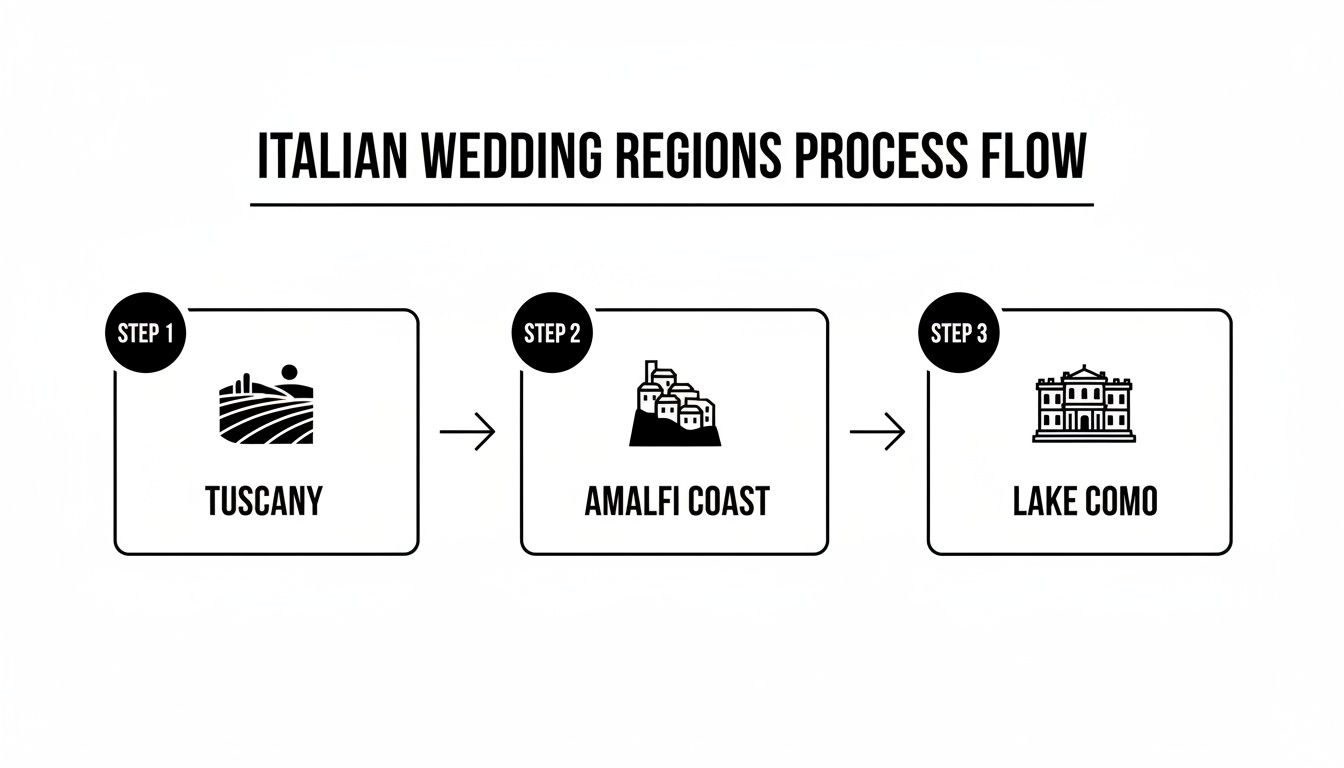
As you can see, each region offers a completely different atmosphere—from the rolling, rustic hills of Tuscany to the glamorous shores of Lake Como. This choice will shape not just your venue, but the entire feel of your day.
Crafting a Realistic Budget for Your Italian Wedding
Let's get down to the numbers, because a solid financial plan is the bedrock of a stress-free destination wedding. Honestly, this is the single most important document you’ll create. It’s not just about tracking expenses; it’s about making conscious decisions and pouring your money into what truly matters to you both.
Right from the start, you have to realise that costs in Italy aren't one-size-fits-all. A lavish, grand-scale wedding at an opulent Lake Como villa will have a completely different price tag than a rustic-chic celebration in a Puglian masseria. This regional price difference trickles down into every single detail, from your venue hire to the cost of your flowers.
How to Allocate Your Funds
While every wedding is wonderfully unique, the financial breakdown for most celebrations in Italy follows a predictable pattern. Your venue and catering will almost always be the biggest slice of the pie, taking up a huge chunk of your total spend.
Here’s a rough framework I've seen work time and again for couples planning from abroad:
- Venue & Catering: 40-50%. This typically bundles the exclusive use of the space, accommodation, and the all-important food and drink for your wedding day.
- Photography & Videography: 10-15%. For most couples, capturing the day beautifully is a top priority. Budgeting properly here ensures you can hire a high-quality, experienced team.
- Wedding Planner Fees: 10-15%. This isn't a luxury; it's an investment in your sanity. A great planner is your local expert and advocate, making the entire process seamless.
- Flowers & Décor: 8-12%. This covers everything from your bouquet and buttonholes to table centrepieces and that stunning ceremony backdrop you’ve been dreaming of.
- Entertainment: 5-10%. Think about your DJ, a live band for the party, or perhaps a string quartet for the ceremony aperitivo.
Of course, these percentages are just a starting point. If a world-class band is your number one priority, you might pinch from the décor budget to make it happen. The crucial thing is to have these conversations early on. To get a head start, you can use our helpful wedding budget spreadsheet to map out and track your spending.
Uncovering the "Hidden" Costs
What often catches couples off guard are the expenses that aren't immediately obvious. These extras can add up quickly if you haven't planned for them. A little foresight here goes a long way in avoiding any unwelcome financial shocks.
Always, always ask about IVA. This is Italy's Value Added Tax, currently at 22%, and it gets added to nearly every supplier invoice. Make sure every quote you receive specifies whether it is 'IVA inclusa' (VAT included) or 'IVA esclusa' (VAT excluded). That one question can save you from a major surprise when the final bill arrives.
Here are a few other common expenses to factor into your budget from day one:
- Supplier Travel & Accommodation: If your perfect photographer is based in Milan but you’re getting married in Tuscany, you’ll likely need to cover their travel and a night's stay.
- Bank Transfer Fees: Sending large payments internationally can come with hefty bank charges. I always recommend using a service like Wise to keep these fees to a minimum.
- SIAE Music Licence: This is a non-negotiable. If you plan to have any music—live or from a playlist—you are legally required to pay for an SIAE licence. Your planner will handle the paperwork, but the cost will be passed on to you.
- Contingency Fund: This is your safety net. I strongly advise setting aside an extra 10-15% of your total budget for the unexpected. You may not touch it, but you'll be so relieved it's there if a last-minute issue pops up.
Budgeting for the Guest Experience
Don't forget, your wedding is also a holiday for your guests. In fact, that’s a huge part of the appeal! An intimate elopement in Positano for a UK couple often sees 33% of guests extending their stay to explore the Amalfi Coast. This trend is only growing.
New data from Amex shows 17% of UK guests heading to destination weddings in 2026 will choose Italy. It's all part of a larger movement where 40% of wedding attendees are preparing for overseas celebrations, driven by a millennial desire for memorable experiences over things.
This means you’ll probably want to host more than just the wedding itself. A casual welcome pizza night or a relaxed farewell brunch are what transform a wedding day into an unforgettable wedding weekend. Just be sure to account for these wonderful extras in your budget from the beginning. Thinking through these financial details upfront is the key to creating an incredible Italian celebration without the stress.
Assembling Your Local Wedding Vendor Dream Team

Let’s be honest, choosing the right team of local vendors is probably the single most important decision you'll make for your destination wedding in Italy. These are the people on the ground who will make or break your day. So, how do you find, vet, and manage them when you’re thousands of miles away?
The key is to look beyond a pretty Instagram feed. While social media is a fantastic starting point for inspiration, you need to dig much deeper. Some of Italy’s most sought-after and reliable vendors get their work almost exclusively through word-of-mouth and planner connections, not just by chasing online trends. A brilliant wedding planner, for instance, will have a personal "black book" of trusted suppliers they’ve worked with for years.
Where to Find Your Italian Vendors
Finding the right people is a mix of smart online research and tapping into insider knowledge. You’ll want to cast a wide net to find the perfect fit for your specific style, personality, and budget.
- Planner Recommendations: This is the gold standard. A great planner has already done the hard work of vetting their vendors for quality, reliability, and professionalism. They know exactly who delivers, time and time again.
- Venue Suggestions: Most high-end venues maintain a list of preferred suppliers. These vendors already know the property, its rules, and how to work around any unique challenges, which can be a massive advantage.
- Specialised Wedding Blogs: Dive into blogs that feature real Italian weddings in your chosen region. It’s an excellent way to see a vendor’s work in the context of a full event, not just a styled shoot.
- Professional Directories: Websites like Matrimonio.com are popular in Italy and can be a useful starting point, but always follow up with your own rigorous vetting.
Vetting Vendors From a Distance
Once you have a shortlist, the real work begins. A beautiful portfolio is just one piece of the puzzle; you need to be sure they’re the right fit for you.
When you're looking through their work, look for consistency. Does every photo gallery showcase the same high quality and style, or are there just a few standout "hero" shots? A strong portfolio shows skill across different lighting conditions and candid wedding moments, not just perfectly staged portraits.
During video calls, get past the surface-level questions. Ask about their process and how they handle unexpected issues. For example, you might ask a photographer, "What's your backup plan for a rainy wedding day at a venue like ours?" Their answer will tell you volumes about their experience and problem-solving skills.
Insider Tip: Don’t be shy about asking a photographer for a full wedding gallery or a planner for a sample timeline. Seeing an entire event from start to finish gives you a much clearer picture of their storytelling ability and organisational skills than a curated highlights reel ever could.
Understanding Italian Contracts and Payments
Navigating contracts in another language can feel intimidating, but a few key terms will help you understand the standard structure. Thankfully, Italian vendor contracts are usually quite straightforward.
Here’s the typical payment schedule you can expect:
- L’acconto: This is the deposit or retainer, paid when you sign the contract to secure your date. It is almost always non-refundable and usually ranges from 30-50% of the total fee.
- Il saldo: This is the final balance. The due date is typically 30 to 14 days before the wedding. Make sure this date is crystal clear in your contract.
Always, always ensure your contract clearly spells out the services included, the total cost (and whether it includes IVA, Italy's VAT), the payment schedule, and the cancellation policy. A professional wedding planner will review every contract for you, acting as your advocate and making sure your investment is protected. Think of them as your cultural translator and quality controller, ensuring every little detail of your destination wedding in Italy is perfectly executed.
Creating an Unforgettable Guest Experience

Your destination wedding in Italy should feel like a holiday for your guests, not a logistical puzzle they have to solve. Think of it this way: true Italian hospitality is all about making people feel welcome and genuinely cared for. That’s the feeling you want to capture.
The best way to do this is through your wedding website. This isn’t just a digital invitation; it’s your chance to be a brilliant travel guide for your loved ones. Pack it with useful details like the best flight routes from the UK, solid advice on car hire, and maybe even a few essential Italian phrases. These little touches help everyone feel more confident and excited about the trip.
Guiding Your Guests with Accommodation
One of the first things your guests will ask is, "Where should we stay?" Being ready with thoughtful suggestions is a key part of being a fantastic host. I always advise couples to prepare a curated list of three to four options that cater to different budgets and travel styles.
- The Main Villa: If you've booked a venue with its own rooms, this is perfect for your immediate family and wedding party.
- A Mid-Range Hotel: Find a charming, well-reviewed hotel nearby. This is for guests who want that perfect blend of comfort and convenience without the premium price tag.
- Budget-Friendly B&Bs or Agriturismi: For those wanting a more authentic (and affordable) stay, suggest some lovely local bed & breakfasts or farm stays.
Always include direct booking links and a simple map showing how close each option is to your wedding venue. This takes a huge amount of stress off your guests' shoulders.
A piece of advice I give every couple: send your save-the-dates at least 9 to 12 months in advance. This gives everyone plenty of time to book flights, sort out time off work, and save up. When it comes to a destination wedding, early communication is everything.
Turning Your Wedding into a Mini-Break
What really elevates a destination wedding is turning it into a multi-day celebration. The events you plan around the main day are where the best memories are made and where everyone truly gets to bond. Focus on experiences that feel quintessentially Italian.
Imagine welcoming everyone with a relaxed pizza night under the stars, complete with flowing local wine. Or maybe you'd prefer to say your goodbyes over a laid-back farewell brunch or with a guided tour of a local vineyard. These shared moments are what people will still be talking about years down the line.
Managing all the details, like RSVPs and dietary needs, can feel daunting, especially with potential language barriers. Use a wedding website that supports bilingual forms. A simple dropdown menu for meal choices and a clear text box for allergies ensures your caterer gets the right information, making every single guest feel properly looked after.
Your Italian Wedding Questions Answered
As you get deeper into planning your Italian wedding, you'll find lots of little questions pop up. It's completely normal. Let's walk through some of the most common ones we hear from couples, so you can handle these details like a pro.
Can We Bring Our Own Wine To The Venue?
I get asked this all the time, and the answer is almost always a polite but firm "no". In Italy, especially if your venue is a working vineyard or farm (agriturismo), wine isn't just a drink; it's a source of immense local and family pride. Showing up with your own bottles can genuinely be seen as an insult to their craft.
But honestly, this is a good thing! Lean into the local culture. Most venues are thrilled to host wine-tasting sessions for you. It's a fantastic way to find the perfect wines to pair with your menu, and it becomes a memorable, fun part of the entire planning experience for you and your guests.
The real magic of an Italian wedding comes from embracing the local traditions. See your venue’s wine as a core part of the authentic experience, not a limitation.
Do We Need Wedding Insurance?
Yes, absolutely. I tell all my couples that this is non-negotiable for a destination wedding. It might feel like just another line item in the budget, but it’s the one that protects your entire financial investment.
Think about it – you’re coordinating so many moving parts across countries. Insurance covers you for those just-in-case scenarios that are out of your control, from a key supplier having to cancel last minute to travel chaos caused by a storm. It buys you peace of mind, which is priceless.
Where Can I Find More General Planning Advice?
Putting together a wedding abroad goes beyond just the Italy-specific details; you're also managing guest travel, timelines, and creative direction from afar. To get a handle on those universal challenges, checking out a broad guide on how to plan a destination wedding can be incredibly helpful. It gives you that bigger-picture framework to build upon with all the specific Italian details.
Planning a celebration requires precision, creativity, and calm execution. At EventBliss, we specialise in turning your vision into a beautifully orchestrated reality. Let us handle the details so you can enjoy every moment. Contact us to start planning your unforgettable event.