

So, you’ve spent months picking the perfect venue, tasting cakes, and choosing your colour scheme. The big picture is complete. But who’s going to make sure the caterers arrive on time, the DJ plays the right song for your entrance, and Aunt Carol’s gluten-free meal actually makes it to her table?
That’s where an event coordinator comes in. They are the on-the-ground directors who take your carefully laid plans and bring them to life on the day itself. Their job is to manage the logistics, ensuring every single detail unfolds just as you imagined.
The Conductor of Your Event

It’s helpful to think of your event as a symphony orchestra. You’ve written the music—the theme, the atmosphere, the key moments you want your guests to experience. The event coordinator is the conductor who stands at the front, clipboard in hand, making sure every musician plays their part in perfect harmony.
They don’t write the score; they master its execution. This is a crucial distinction. They step in a month or two before the event, focusing entirely on turning your blueprint into a living, breathing, seamless performance.
The Three Core Functions
So, what does this look like in practice? An event coordinator’s role is built on three essential pillars.
Pre-Event Logistics
In the final 4-8 weeks, your coordinator gets into the weeds. This is where they review every contract, build a master timeline that maps out the day minute-by-minute, and create detailed floor plans. They’ll spot potential issues you’d never think of, like where the generator for the string lights needs to go or how to manage guest flow between the ceremony and reception areas.
Vendor Coordination
This is a game-changer. Instead of you fielding calls from a dozen different suppliers, the coordinator becomes the central point of communication. They'll confirm arrival times, double-check orders, and make sure the photographer knows when the speeches are happening. No more crossed wires or last-minute panics. They handle it all.
On-Site Management
On the day, your coordinator is the first to arrive and the last to pack up. They are your eyes and ears, overseeing everything from the venue setup to directing guests. When the heavens inevitably open at an outdoor wedding or a speaker goes missing just before their slot, they’re the ones who calmly find a solution before you even realise there’s a problem.
An event coordinator’s real magic is their ability to absorb stress. They manage the chaos with a calm authority, allowing you to step back and actually enjoy the event you worked so hard to create.
Ultimately, their focus is on the "how," not the "what." You chose the band; they make sure the band has power, a stage, and their cue to start playing.
To give you a clearer picture, here’s a quick breakdown of how their responsibilities fit into the event lifecycle.
Event Coordinator Core Responsibilities at a Glance
This table shows the primary duties of a coordinator across the key phases of an event, from initial logistics to the final wrap-up.
| Phase | Key Responsibilities | Example Task |
|---|---|---|
| Pre-Event (4-8 weeks out) | Timeline creation, vendor confirmation, finalising logistics. | Building a detailed production schedule for all vendors. |
| Event Day | On-site management, problem-solving, timeline adherence. | Cueing the wedding party for the ceremony procession. |
| Post-Event | Overseeing breakdown, final payments, feedback collection. | Ensuring the venue is cleared according to contract terms. |
As you can see, their involvement is practical and hands-on, designed to bridge the gap between your vision and a flawless reality.
The Blueprint for a Flawless Event
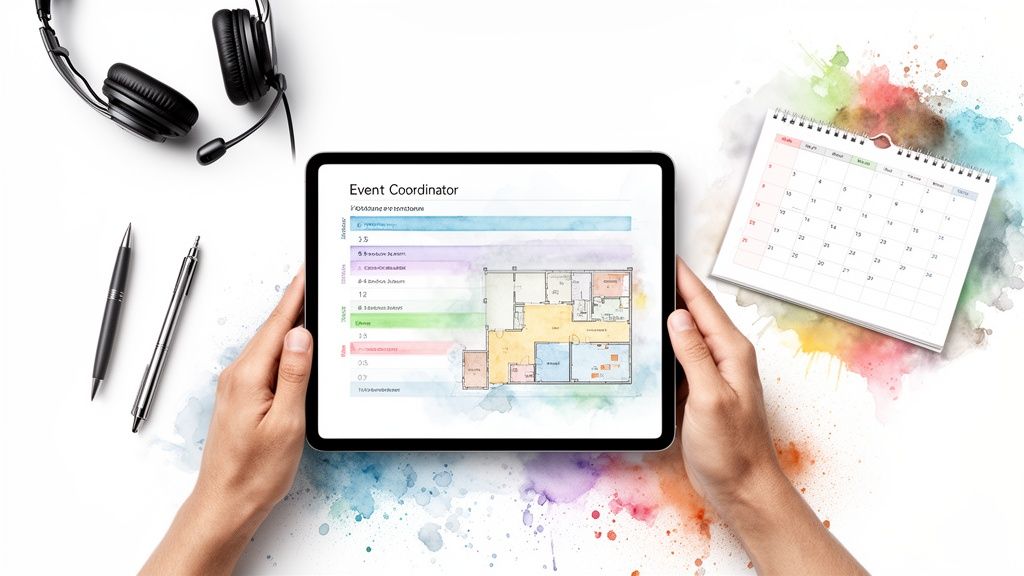
While guests are marvelling at the stunning decor and seamless flow of an event, the coordinator's real work has already been done, locked away in a master blueprint. This isn’t just a to-do list; it’s the central nervous system of your event, a collection of meticulously crafted documents that guide every supplier, every team member, and every single moment.
Think of an orchestra conductor. They don't play an instrument during the performance; their job is to ensure every musician plays their part perfectly, at the right time. That’s what a coordinator does—they translate your vision into a series of detailed, practical steps that everyone can follow, ensuring the final result is harmonious.
This behind-the-scenes preparation is what makes an event feel effortless. It’s the difference between a celebration that runs like clockwork and one that’s full of awkward pauses and last-minute scrambles.
The Production Schedule: Your Event's Bible
First up is the production schedule, often called a 'run sheet'. This is the master document, sometimes running dozens of pages long, that maps out the entire event from start to finish. It’s the single source of truth, holding everything from supplier contact details and arrival times to power requirements and emergency plans.
So, what do we actually do with it? We use this document to get a bird's-eye view, spotting potential logjams weeks in advance. For instance, we might see the lighting crew needs a two-hour window to rig their equipment in the exact spot where the florist needs to assemble a large floral arch. The schedule allows us to see that clash and adjust timings so both teams can work without getting in each other's way.
This document covers everything, from the grand moments to the tiniest details:
- Supplier Load-In: Pinpointing exactly when the caterers, DJ, and stylists will arrive, and where they need to park and unload.
- Technical Rehearsals: Scheduling sound and AV checks long before any guests arrive, so you can be confident the speeches and presentations will go off without a hitch.
- Meal Service Cues: Liaising with the catering manager on the exact minute to begin service, timed perfectly around keynotes or toasts.
- The Breakdown: Coordinating the pack-down to make sure the venue is cleared and returned to its original state on schedule, avoiding extra fees.
The Minute-by-Minute Timeline: Choreographing the Guest Experience
While the production schedule is about logistics, the minute-by-minute timeline is all about the experience. This is the heartbeat of your event day, dictating the 'when' for every single moment your guests will encounter. For a wedding, it ensures the music swells at the perfect time for the walk down the aisle. For a product launch, it guarantees the CEO's big reveal happens precisely on cue.
A good coordinator is obsessed with this flow. We know that a 15-minute delay in serving dinner can throw the whole evening off, pushing back the entertainment and killing the momentum. We manage this timeline with a firm but gentle hand, cueing speakers when it’s their turn, guiding guests between spaces, and keeping everything moving along beautifully. To create a truly effective timeline, we often start with expert venue sourcing and management to ensure the location's rules and capabilities are baked into the plan from day one.
"A coordinator's true value lies in their ability to manage the hundreds of invisible details that create a seamless guest experience. They are the proactive problem-solvers who handle challenges behind the scenes, so the client only experiences the magic."
Ultimately, investing in a coordinator is an investment in your own peace of mind.
The Floor Plan: Designing for Flow and Function
A beautiful space is one thing, but a functional space is another. An event coordinator lives and breathes floor plans, constantly thinking about how to optimise the layout for the best possible guest flow. The last thing you want is a bottleneck at the bar or a long queue snaking from the toilets.
We map out where to place the registration desk to avoid a welcome-area pile-up, how to position the dance floor to create an amazing atmosphere, and how to give service staff clear, easy-to-navigate pathways. This spatial planning is crucial for creating a comfortable, intuitive environment where your guests can simply relax and have a great time.
It’s this logistical expertise that drives the UK's £42.3 billion events industry. In fact, research shows that 55% of event professionals work overtime in the weeks leading up to an event, all to guarantee that every detail on the blueprint is executed to perfection.
Event Planner vs Event Coordinator: Clarifying the Roles
In the events world, you’ll often hear the terms ‘planner’ and ‘coordinator’ used as if they mean the same thing. It’s an easy mistake to make, but it causes a lot of confusion. While both professionals are committed to making your event spectacular, their roles are actually quite different. Understanding this difference is the secret to hiring the right expert and seeing your vision come to life just as you imagined.
Let's use an analogy. Think of building your dream house. An event planner is your architect. They’re with you from day one, often months or even a year-plus out, sketching out the entire blueprint from scratch. They help you define the vision, set a realistic budget, choose the style, scout the perfect location, and book your main suppliers. Their work is all about the big picture and long-term strategy.
An event coordinator, on the other hand, is the general contractor. They arrive on-site once the architectural plans are finalised, typically four to eight weeks before the big day. Their role isn't to design the house, but to take those blueprints and manage the entire construction process, making sure every nail, wire, and tile is perfectly placed.
Scope of Work and Timeline
The biggest distinction between the two really comes down to their timeline and what they're responsible for. A planner is your strategic partner from concept to completion, guiding you through every major decision. They build the very foundation of your event—from budgets and themes to finding vendors and negotiating contracts.
A coordinator’s job is purely about logistics and execution. They take over once the 'what' and 'who' have already been decided, and they focus entirely on the 'how'. So, they won’t help you choose your caterer, but they will call them to confirm arrival times, finalise the service plan, and make sure they have everything they need based on the contract you signed.
An event planner helps you decide what to build. An event coordinator makes sure it gets built perfectly according to plan, managing every detail on-site so you don't have to.
This means a coordinator’s work is concentrated in those final, critical weeks and, most importantly, on the day of the event itself.
A Head-to-Head Comparison
So, how do you know which one you need? If you’re starting with a blank page and feeling overwhelmed by all the choices, you’re looking for a planner. But if you’ve confidently booked your main suppliers and now need a pro to pull all the strings together, that’s a job for a coordinator.
To make it even clearer, let's put their roles side-by-side.
Event Planner vs Event Coordinator: What's the Difference?
Here’s a simple breakdown of how these two vital roles differ in practice.
| Aspect | Event Planner (The Architect) | Event Coordinator (The General Contractor) |
|---|---|---|
| Involvement Timeline | Starts at the very beginning (6-18+ months out). | Joins in the final phase (4-8 weeks out). |
| Primary Focus | Vision, design, budget, and overall strategy. | Logistics, execution, and on-site management. |
| Key Responsibilities | Venue selection, vendor sourcing, theme creation, budget management. | Creating timelines, confirming vendors, managing event day flow. |
| Core Question | "What kind of event do we want to create?" | "How will we make this event happen seamlessly?" |
At the end of the day, both roles are essential to a thriving events industry. A great planner lays the groundwork for success, and a great coordinator ensures the performance itself is absolutely flawless. Knowing which one you need is the first step toward a stress-free, beautifully run celebration.
A Day in the Life of an Event Coordinator
We’ve talked about the theory, but what does an event coordinator really do on the day? To get a proper feel for their value, you have to walk a mile in their shoes—or, more likely, run a marathon through the controlled chaos of a live event.
The event day is showtime. This is where months of careful planning meet the real world. The coordinator becomes the stage director, moving silently behind the curtain, cueing every scene and putting out fires before anyone even smells smoke.
Let’s make this real. Here’s a look at three different coordinators navigating three very different events.
The Wedding Day Timeline
First up is Maria, who is running a classic summer wedding. Her day began hours before the first glass of champagne was poured.
- 9:00 AM: Maria is already on-site, clipboard in hand, for a final walkthrough with the venue manager. She’s checking that every table, chair, and decoration matches the floor plan precisely.
- 11:00 AM: The florist and cake maker arrive. Maria is their point person, directing the assembly of the floral arch and making sure the beautiful (and expensive) cake is placed safely out of the sun’s reach.
- 2:00 PM: She pops in to see the bridal party, offering a calm presence and confirming everyone is on schedule. A few minutes later, she’s running a quick sound check with the ceremony’s string quartet.
- 3:30 PM: Guests are arriving. Maria and her assistant are there to greet them, guide them to their seats, and hand out programmes.
- 4:05 PM: A tiny blip: the bride is ready, but the DJ accidentally skips her procession song. Maria catches it instantly, discreetly signals the quartet, and they transition seamlessly to the correct piece. No one but her even notices.
- 6:00 PM: As the reception gets into full swing, she cues the best man for his speech. The second he finishes, she gives the nod to the caterers to begin dinner service. Flawless timing.
- 10:30 PM: Maria organises the sparkler send-off, getting guests into two perfect lines to create a safe and magical exit for the newlyweds.
Throughout it all, Maria is the central hub for every question and the fixer for every problem. The couple just gets to be present and enjoy their day, completely oblivious to the dozen minor issues she handled behind the scenes.
The Corporate Product Launch
Now let’s shadow David, who is coordinating a high-stakes corporate product launch. His world is all about precision, brand image, and tech.
David’s day is scheduled down to the second. His job is to make sure the company’s big moment lands perfectly with the press, investors, and public.
- 10:00 AM: David is overseeing the AV team. They’re running a full rehearsal of the CEO’s keynote, complete with lighting cues and video transitions, ironing out any potential glitches.
- 1:00 PM: The keynote speakers and VIPs begin to arrive. David personally greets them, shows them to the green room, and confirms any last-minute technical needs for their presentations.
- 2:45 PM: He moves on to the press corps, handing out media kits and directing them to designated spots. This ensures they get great shots without disrupting the event’s flow.
- 3:30 PM: The presentation starts. David is in the control booth, run sheet in hand, cueing the live stream, slides, and a surprise product reveal video right on schedule.
- 5:00 PM: During the networking reception that follows, he ensures catering staff are circulating with canapés and that the new product is displayed prominently and looks its best.
For David, the role is about protecting the brand’s reputation. Every single detail, from the lighting to the canapés, has to scream professionalism.
On the day of the event, the coordinator is the ultimate problem-solver. They are the calm anchor in a sea of moving parts, ensuring the client’s only job is to be the host.
The Destination Party in Alicante
Finally, let’s join a coordinator managing a huge birthday bash in sunny Alicante, Spain. This event is a logistical puzzle of local vendors, language barriers, and international guests.
One of her biggest challenges is simply moving people from one place to another. For complex events like this, knowing the local transport ins and outs is vital, which is why we’ve put together a whole guide on arranging seamless event transportation to help tackle just that.
Her timeline is built entirely around the guest experience, especially for those who’ve flown in.
- 12:00 PM: She’s on the phone confirming the chartered bus for guest pickup, triple-checking the route and timing with the local Spanish-speaking driver.
- 3:00 PM: She’s at the stunning cliffside villa, directing the setup of a live paella station and a stage for a flamenco performance, using a mix of Spanish and English to get it just right.
- 5:00 PM: The bus arrives. She’s at the door to greet guests with a welcome drink, making their arrival feel effortless and impressive.
- 8:00 PM: As the sun sets over the Mediterranean, she cues the live band to begin and coordinates with the bar staff to kick off cocktail hour.
- 11:00 PM: She manages the departure, making sure every guest is accounted for and safely on board the bus back to their hotels.
In every one of these scenarios, the coordinator’s job is clear. They execute the plan, own the timeline, and solve problems with a calm authority that makes the entire event feel like it just… happened. Effortlessly.
The Essential Skills of a Great Event Coordinator
So, we’ve talked about what an event coordinator does—the tasks, the timelines, the deliverables. But what truly separates a good coordinator from a great one? It’s not just about having a clipboard and a can-do attitude. The real magic lies in a specific set of skills that turn a well-planned event into a seamless, unforgettable experience.
It’s one thing to have a detailed plan on paper. It’s another thing entirely to execute that plan with grace when things inevitably go sideways. I like to think of a great coordinator as the captain of a ship. They have a clear course charted, but their true value is shown when they navigate a sudden storm, keeping everyone calm and ensuring the ship reaches its destination safely.
Unshakeable Organisation and Attention to Detail
At the heart of it all is an almost obsessive level of organisation. We’re not just talking about tidy to-do lists. A truly brilliant coordinator has a knack for seeing both the entire forest and every single leaf on every tree, all at once. They manage hundreds of moving parts without ever losing sight of the tiny details that matter.
For instance, they won’t just confirm the caterer’s arrival time; they’ll double-check that the special-order vegan canapés are plated separately and clearly labelled. They don’t just book a band; they make sure the band has the exact version of your first dance song, not the strange acoustic cover from YouTube. This meticulous approach is crucial, and you can see how it applies to one of an event’s most important elements in our guide on organising music and entertainment.
Grace Under Pressure and Proactive Problem-Solving
Let’s be honest: no event ever goes 100% according to plan. A keynote speaker gets stuck in traffic. A sudden downpour threatens your beautiful outdoor ceremony. This is where a coordinator earns their fee. An average one reacts to problems as they happen. A great one has already anticipated them.
A truly skilled coordinator lives in a world of “what ifs.” They’ve already thought through the scenarios. They have the backup generator company’s number on speed dial, they know exactly where the venue keeps the extra umbrellas, and they have a Plan B, C, and D ready to go at a moment’s notice.
This ability to stay cool and think clearly when the pressure is on is probably their most valuable trait. When a mini-crisis hits, they don’t panic. They simply pivot, communicate what needs to happen, and roll out a solution before most guests even notice something was amiss.
The timeline below gives you a sense of this constant juggling act, showing how a coordinator’s day involves managing different types of events, each with its own unique pressures and priorities.

As you can see, they have to switch gears effortlessly, moving from the emotional beats of a wedding to the sharp, commercial focus of a corporate launch, all in a single day.
Sharp Communication and Negotiation Skills
Think of your event coordinator as the central hub for all communication. They are constantly talking to you, your vendors, the venue staff, and even your guests. To do this effectively, they need to be expert communicators who can deliver information clearly, listen carefully, and negotiate firmly on your behalf.
This skill is absolutely vital in the UK’s bustling £2.4 billion party and event planning market. With so much at stake, coordinators are the conductors of the orchestra, overseeing everything from décor to guest lists. It’s a high-pressure job—industry reports show that 77% of event professionals experience significant stress—which makes their calm, clear-headed execution essential for bringing a client’s vision to life.
For example, what happens if a key supplier turns up late? A great coordinator doesn’t just get frustrated. They calmly but firmly find a solution, whether that’s negotiating a partial refund for you or finding a way to speed up the setup to get everything back on track. This ability to advocate for your best interests is precisely what makes their expertise such a worthwhile investment.
When Should You Hire an Event Coordinator?
Bringing a professional on board can feel like a huge decision, but figuring out the right moment to hire an event coordinator is actually quite straightforward. There are a few tell-tale signs that it’s time to pass the logistical baton. This isn’t about losing control; it’s about buying back your peace of mind.
The most common cue? That creeping sense of being completely overwhelmed by the details. You’ve probably handled the exciting parts – booking that dream venue, picking a delicious menu, and finding a great band. But now you’re staring at a mountain of supplier contracts, a dozen different contact numbers, and a timeline that needs to be synchronised down to the minute.
This is exactly where a coordinator shines. They step in to become the master of all those moving parts, freeing you up to focus on the bigger picture. More importantly, they allow you to be a guest at your own event, not its stressed-out stage manager.
Key Moments to Hire a Coordinator
Not sure if you’re at that point yet? If you find yourself nodding along to any of the scenarios below, a coordinator might just be the best investment you make for your event.
- You’ve locked in your main vendors. You have your venue, caterer, and photographer sorted, but there’s no single, master plan to connect them all. A coordinator acts as the central hub, creating one definitive timeline and becoming the only point of contact everyone needs.
- You want to enjoy the day, not run it. Your goal is to celebrate with your colleagues, friends, or family. You have zero interest in spending the day chasing deliveries, fixing a problem with the sound system, or telling the caterer when to serve the main course.
- You’re planning from a distance. For a destination event in a place like Alicante, local knowledge is gold. A coordinator on the ground knows the best regional suppliers, can navigate any language barriers, and manages on-site logistics you simply can’t handle from hundreds of miles away.
- The logistics are getting complicated. You’re starting to worry about how to manage guest flow, arrange transport between two different locations, or make sure all the technical gear works together flawlessly.
An event coordinator is an investment in being present. Their entire job is to wrestle with the logistics so you can soak up the moments that matter, making memories instead of managing tasks.
Understanding the Timing and Cost
Most people bring a coordinator on board for what the industry calls ‘month-of’ coordination. Don’t let the name fool you; this service typically kicks off 4-8 weeks before the event date. This gives your coordinator enough time to dive into your plans, introduce themselves to all your suppliers, and build that all-important master schedule.
When it comes to cost, you’ll usually find coordinators charge a flat fee, not a percentage of your total budget. This fee is calculated based on the scale, complexity, and length of your event, which gives you a clear, predictable cost from the start. It’s helpful to think of it less as an expense and more as an insurance policy against stress and last-minute chaos.
Questions to Ask a Potential Coordinator
To find the right person for the job, you have to ask the right questions. You’re not just checking their experience; you’re making sure their communication style and approach to problem-solving are a good fit for you.
Here’s a quick checklist to guide you during your initial conversations:
- What does your process look like in the final month before the event? This will show you exactly how they take over the reins.
- Can you tell me about a time you handled an unexpected issue at an event? This is the best way to gauge their grace under pressure and real-world problem-solving skills.
- How do you prefer to communicate with clients and suppliers? You want to make sure their style (e.g., email-heavy, weekly calls) matches your own expectations.
- Have you worked at my venue or with any of my suppliers before? Existing relationships can make for an even smoother, more seamless collaboration.
- What specific information will you need from me to get started? A true professional will have a clear and organised onboarding process ready to go.
By asking these questions, you’re setting yourself up to find a partner who won’t just execute your vision perfectly but will also make the final weeks of planning feel calm and completely under control.
Your Event Coordination Questions Answered
Thinking about hiring an event coordinator? It’s a smart move, but it’s natural to have a few questions before you do. We get it. Below, we’ve answered some of the most common things prospective clients ask us, giving you the straightforward advice you need.
How Much Does an Event Coordinator in Spain Cost?
The final price tag will, of course, depend on your event’s size and all the moving parts involved. Most coordinators, however, work with flat-fee packages for ‘month-of’ or ‘day-of’ coordination, so you know exactly what you’re investing from the start.
It’s less about seeing it as another expense and more about buying yourself peace of mind. You’re paying to be a guest at your own event, completely free from stress.
Can I Hire Someone Just for the Wedding Day?
You certainly can, and it’s an incredibly popular choice often called ‘day-of’ coordination. Here’s something many people don’t realise, though: the work actually begins 4-6 weeks before your wedding.
This lead-up time is essential. Your coordinator will get to know all your chosen suppliers, review every detail of your timeline, and arrange a comprehensive handover. This preparation is what allows them to step in and run the day perfectly, just as you envisioned.
The core difference is simple: a venue manager works for the venue, focusing on their property and staff. An event coordinator works exclusively for you, managing your vision, your timeline, and all your chosen vendors to ensure every detail is perfect.
Do I Need a Coordinator if My Venue Has a Manager?
Yes, and this is a big one. A venue manager is brilliant at what they do, but their primary responsibility is to the venue. They’re there to manage the building, oversee their own staff, and make sure their property’s rules are followed.
An event coordinator’s loyalty is 100% to you. We manage all your suppliers (not just the venue’s), stick to your schedule, and troubleshoot any issue that pops up to protect your vision for the day. We are your personal advocate from start to finish.
What Is the Main Benefit for a Corporate Event?
For any corporate function, the biggest win is undoubtedly focus. When you have a coordinator handling the operational side of things—from sorting the AV equipment to making sure the catering comes out on time—your team is free to do what they do best.
Instead of running around with a clipboard, they can be fully present. They can network with key clients, build relationships with partners, and truly represent your brand, knowing all the logistics are being managed with professional precision behind the scenes.
Ready to ensure your next celebration is perfectly executed without the stress? The team at EventBliss specialises in turning your vision into a flawless reality. Learn more about our coordination services and get in touch today!